
These texts took longer to write than they might seem to. Some chapters are being published on their own; others are waiting for a book form. Here is their home.
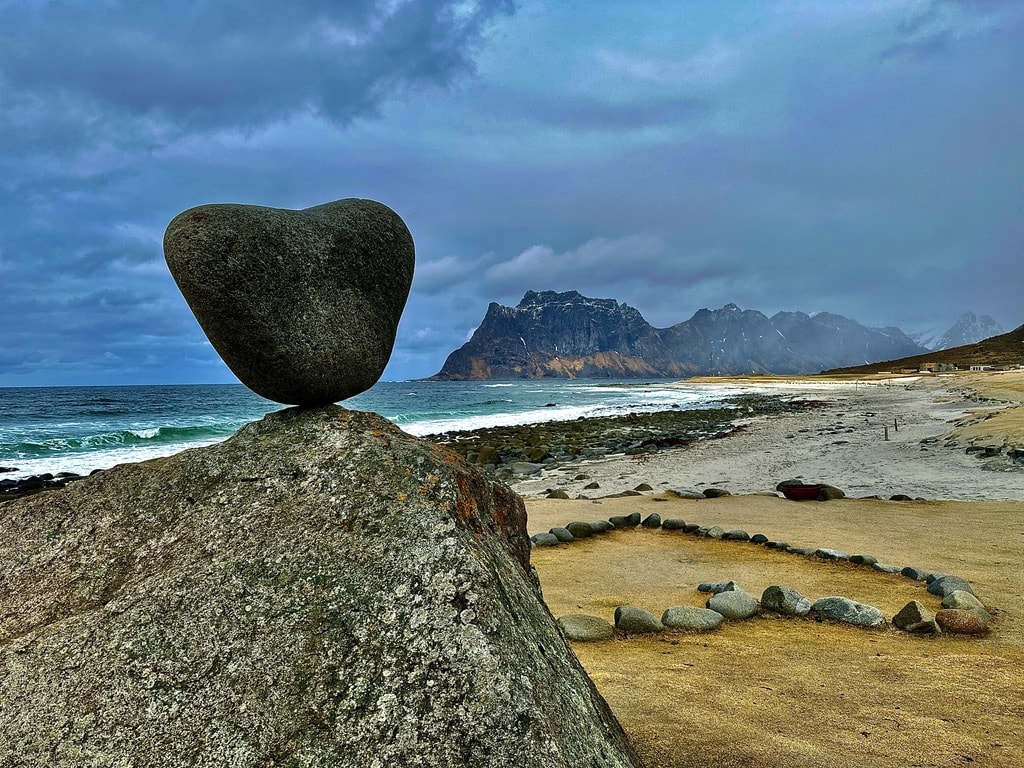
Lofoten – a few notes on love at second sight
Does love at second sight exist? The lines that follow are a personal confession about intimate things.
The Štiavnica apartment of the Norwegian royal couple
It first happened to me in Banská Štiavnica. My father spent the first days of his life hidden in an old mine adit - it was wartime. For me, Štiavnica is tied to my great-grandmother, to a mysterious house in the old town, and to the meadows beyond Kalvária that you used to have to pay a levy on. I experienced almost none of that myself. As a born Tatra local, I was looking forward to the moment I'd see the land of the tajchy (the old mining reservoirs). My first visit to what was once perhaps the wealthiest town in Central Europe was an awkward one. On Silver Street, only round timber beams were keeping the facades of the burgher houses from collapsing. You could smell that a dog had died somewhere in town. I told myself: don't let it get to you so much - go take a look at it from above. I climbed the Way of the Cross up to Kalvária above the town. But up there I got a brutal knockout - my head dropped from the sadness. The town's baroque symbol was completely devastated. When I met my father some time later, he asked how I'd liked Štiavnica - I could tell the question amused him. I remembered a tiny carbide lamp his own father had had made for him as a boy. They were made from spent artillery shell casings, which got a second, peaceful life that way. You put calcium carbide in the lower chamber and water in the upper one - it produces acetylene, which burns with an unusually bright light. It's an explosive combination the mining technicians of Štiavnica had real experience with - they were the first in the world to start using explosives for peaceful purposes, first gunpowder, later dynamite from Alfred Nobel's factory in Bratislava. Some time later I came back to Štiavnica, looking for a representative venue for tech industry leaders in the antivirus field. At the historic hotel, the receptionist told me that just the day before, Norway's King Harald V and Queen Sonja had had a reservation there. It was autumn; by the time I'd finished dinner it had gotten dark. I went for a walk, climbing Katova Street up toward the chateaus. That's when I felt it happening - with every step I fell a little more in love with the town.
The two sides of mountain postcards
At the end of the last century I was running adventure therapy based on rock climbing at a psychological counselling centre - the final chapter of my time working in Bratislava. The graduates of the program scattered out into the world, and I went home to the Tatras. Because of that, starting that autumn, I'd get a postcard from Norway every so often, written by a girl with a nickname referring to a "revelation." After a spring and summer on the sun-drenched rock walls of Slovakia, she found herself in the twilight half of rainy Norway's darkness. Back home she'd had climbing partners; in Norway the locals kept their distance. Those postcards had two completely different sides. The front was decorated with a beautiful, mysterious climbing photo from the Norwegian mountains. The back was full of loneliness. I tried to help, at least from a distance, and started looking into Norway's climbing possibilities. It wasn't terra incognita - Tatra climbers had already been climbing hard routes there back in the seventies. But what I needed to find was something extreme in beauty, not in difficulty. I discovered several interesting areas, and one of them caught my attention the most: somewhere up near the Arctic Circle, an archipelago of mountains rising out of the sea, called Lofoten.
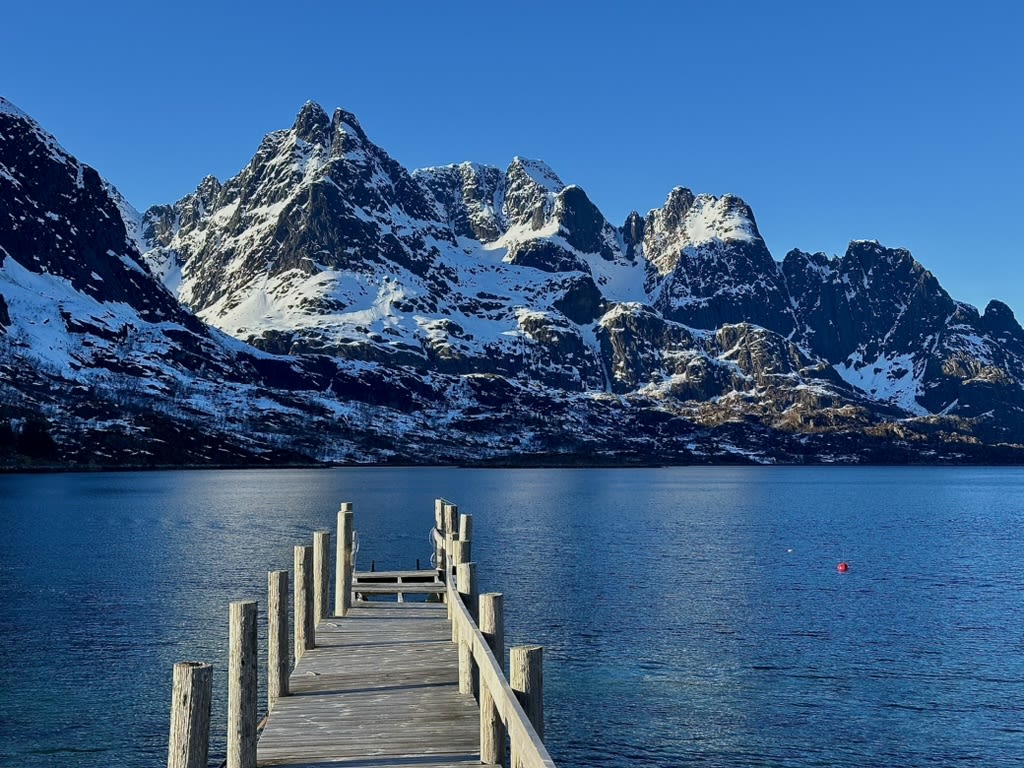
Darkness at the Nobel Prize ceremony
Norway isn't an ideal country for a low-budget holiday - at the end of the last century that was even more true. A bowl of soup there cost what a three-course meal did back home, and on top of that, Lofoten isn't exactly right around the corner - it's nearly 3,000 kilometres from the Tatras by car. Planning a trip there called for thinking practically - in my case, that also meant thinking academically. So when an offer for a doctoral placement in Oslo came along, I didn't hesitate. I told myself: "It's only half the journey, but hopefully the scholarship will help me get through the other half." It worked out, though not quite the way I'd imagined - they gave me a placement for November and December. Polar night isn't the ideal time for Lofoten. What could I do? For my forced exile in a more nocturnal than daytime Christiania, I had to find some other kind of magic. Oslo has a strong cultural scene, and the money I'd set aside for Lofoten mostly disappeared into club concerts, with some going toward galleries, museums, theatre, and the opera. I still have a favourite park there to this day. One of the evenings I still remember was a concert at the tiny club Cafe Mono.
Norwegians come across a bit differently from Slovaks - let's say they're more budget-conscious. They're also more polite, even while sniffling their snot right back down into their stomachs - you might doubt it, but the ladies do it too. Most of them are absolute patriots, capable of decorating a Christmas tree at home with dozens of tiny Norwegian flags - I've seen it with my own eyes. They keep their distance from newcomers, and try to do it in a cultivated way. But their discipline does have one weak spot: it seems to me that, compared to us, they more often struggle to pace how much alcohol they drink on a single occasion. Maybe that's partly why alcohol sales are restricted to the state-run Vinmonopolet shops - wine and spirits are sold only until six o'clock, at prices that hurt. But an international placement is supposed to be about sharing experience, so within the closer circle of my university colleagues, I showed them one possible approach to their situation. To anyone who worked up the nerve to join me for an evening of culture, I kindly offered a taste of some of our national products. Mostly the ones tuned to 52% strength. I knew that without the right pharmacotherapy, their problem of social reserve would be hard to overcome, so I had to make the sacrifice. I assured them it was a bio-beverage, suitable for vegetarians, vegans, gluten-free, and lactose-free diets alike. They took a liking to the custom, and to the phrase "for the other leg" too - they rarely turned down a chaser. Thanks to that, the Scandinavian chill started losing its grip. We discovered we'd watched the same fairy tales as children - Maja the Bee from Guruna and Cinderella both. The distance between us shrank a little.
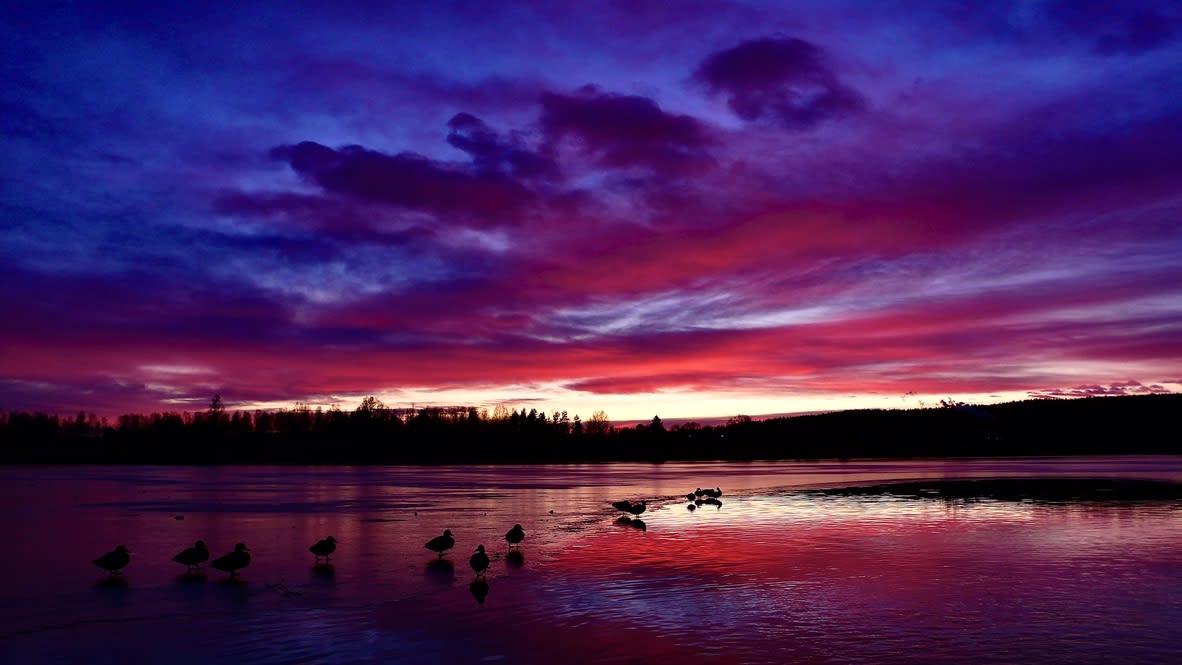
Around that time, the Nobel Peace Prize ceremony was taking place in Oslo. I could feel their pride. Walking through the city centre we watched anti-tank barriers and barbed-wire fences go up alongside the Christmas decorations because of it. Norwegian Silent Night played everywhere - they sang "Fred på jord, fryd på jord" (Peace on earth, joy on earth), and the police issued a warning telling people not to stand too close to their windows, in case American snipers might shoot them. There were more of them there than back when the Nazis had a machine-gun nest on the roof. The laureate was Barack Obama. The square in front of city hall is enormous - even it wouldn't have been big enough for the bodies of the victims of that era's wars: Libya, Iraq, Afghanistan, Syria, Yemen. Guantánamo remained open. I looked into the faces of the bronze workers standing in front of city hall - into the eyes of the mother from Gustav Vigeland's sculptures, holding her children's hands. They said nothing. I understood that at the awarding of the Peace Prize, darkness reigns in Norway. Too bad no one showed King Harald V how to use a carbide lamp back in Štiavnica - maybe there would have been a bit more light there for a moment.
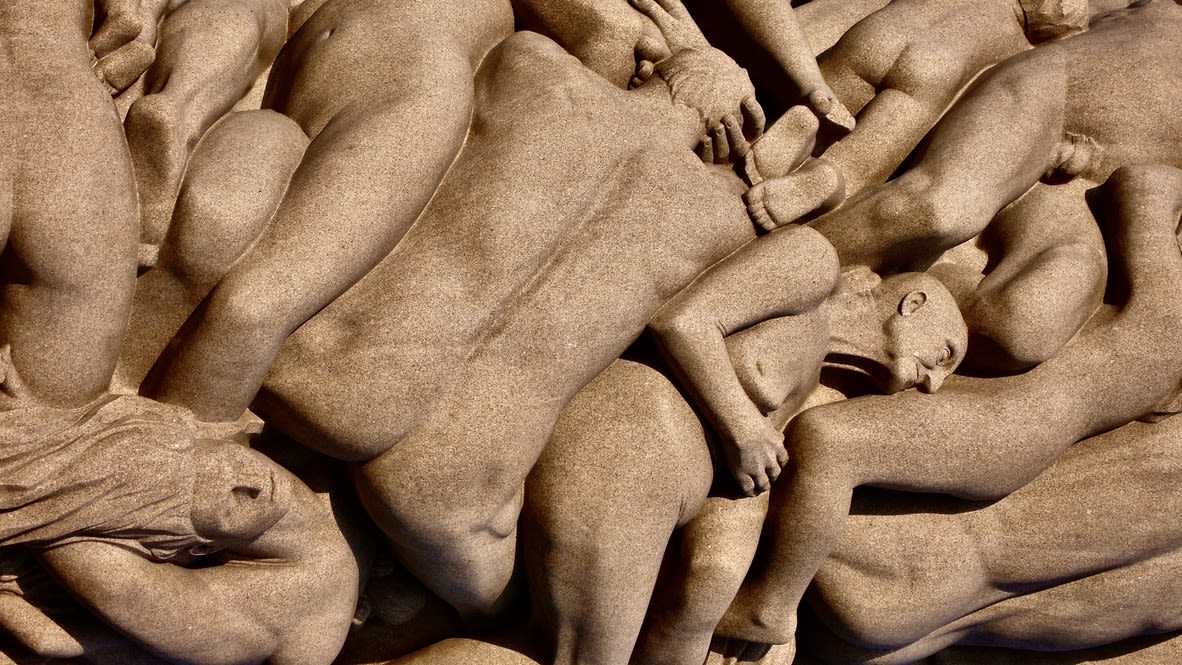
How far away is Lofoten?
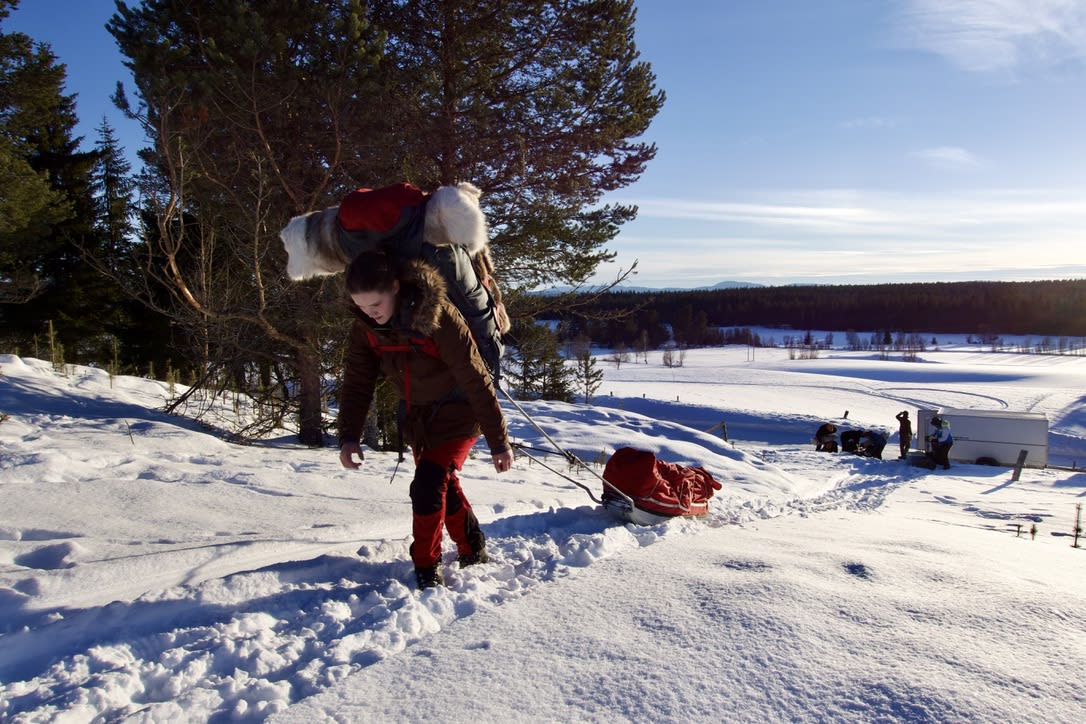
On my second professional visit to Norway, I put my experience as a ski mountaineering instructor to use. At a forestry school in the mountains near the Swedish border, I led theoretical and practical training on avalanche awareness - I deliberately included the now rarely used Norwegian avalanche probe technique, since the chance to teach Norwegians their own probe technique doesn't come up often. It was interesting to compare life on the periphery with life in the capital. I was struck by how the students arriving at the school handed over their own rifles to the deputy headmistress, who returned them again after class. As part of this project, they showed me how they track game, and I rode on dog sleds - not the circus kind, the real thing. Once we carried furs up into the mountains and built a traditional Sámi tent together, called a lavvu. Students and teachers alike slept on the snow inside it. Dinner was Arctic cranberries and pancakes cooked over the fire, and of course there was no shortage of the "fragrant" delicacy called rakfisk - fish left to ferment in barrels for several months. The ideal meal to bring into the mountains: you simply have rakfisk for dinner, and after that you can't smell anyone's stinky socks in the tent at all. Outside it was bitterly cold - I'd guess around -15°C. I assumed that after dinner, everyone would climb into their sleeping bag while still warm from the fire and stay there until morning. Instead, they woke me up after midnight so I wouldn't miss the ski jumping competition. That's when I finally understood that the term "friluftsliv," which I'd been researching as a doctoral student in Oslo, isn't just theory. You don't have to be out in nature all the time - but when you are, you can be there fully. And what "fully" means is entirely up to you to decide.
Before flying home, we went to a restaurant together - our Norwegian colleagues invited us, since it was a line item in their grant. They said we couldn't miss it, since it was a seasonal specialty. When the fish showed up on our plates, one of them mentioned that it had still been swimming off Lofoten just the day before. That got my attention. They explained it was a type of cod called skrei - schools of these fish migrate there only at the height of winter. Good restaurants get them into the kitchen by plane, usually within 24 hours of being caught. It hit me: Lofoten is close. It all depends on how you look at it.
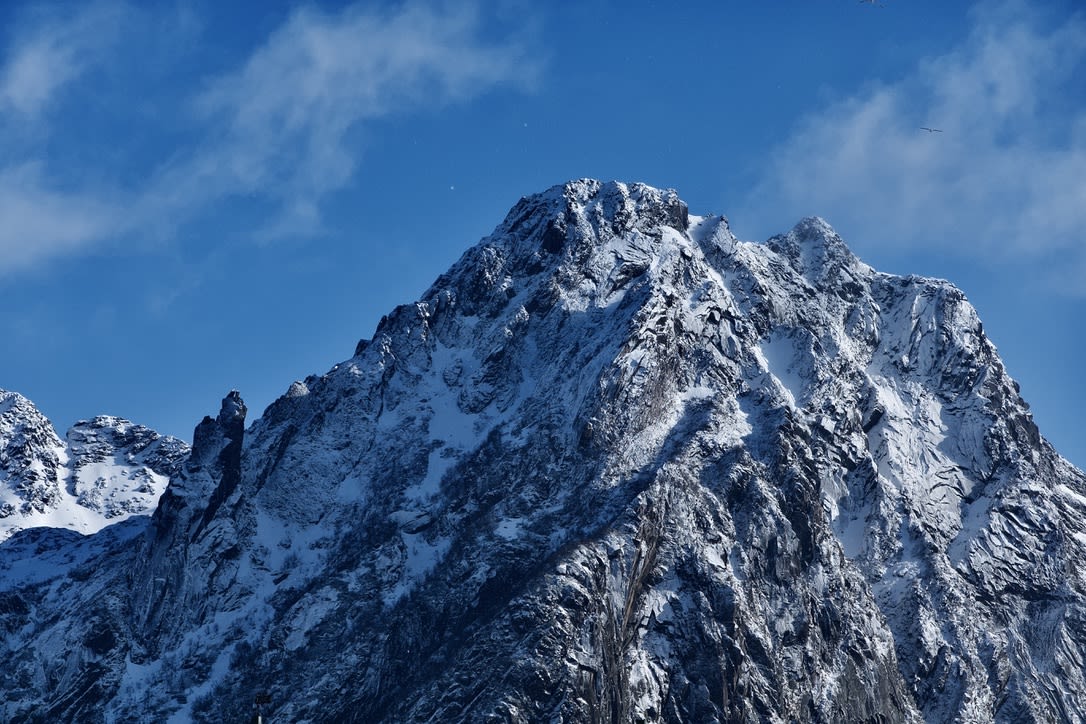
The light and freedom of the Norwegian mountains
I first visited Lofoten in the first half of summer. The sun doesn't set then, and the temperature hits the highest numbers of the whole year. I was planning the trip for someone who wanted to climb in the mountains - everything else interested him less. I knew that, because of work commitments, he had only this one chance for a summer holiday, so I picked the best of the best. I suspected we wouldn't exactly be blacking out on the wall during that season - more likely we'd go crazy from the endlessness of light and climbing. I wasn't far from the truth, I just hadn't quite guessed the reason for our particular brand of madness. Those islands have a lot of what I love: beautiful mountains and sea inlets lined with big walls of compact granite. Wooden fishing houses called rorbuer stand right over the water. Everything is clean. Population density along the coast is minimal, and inland it's essentially zero. It was more beautiful than I'd imagined.
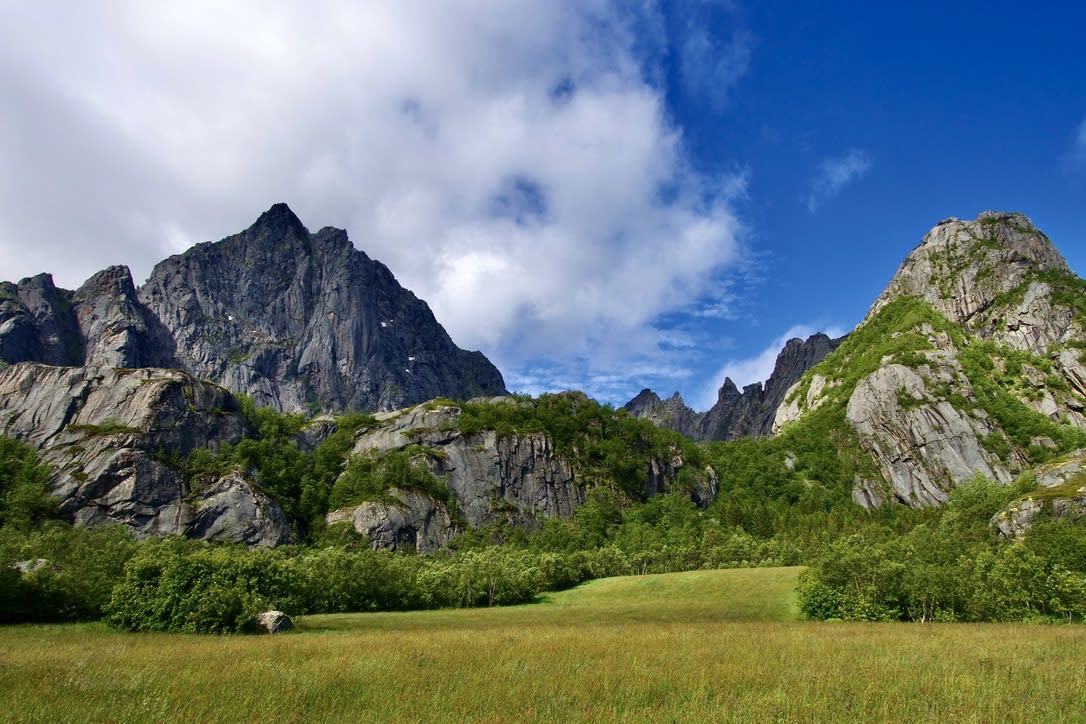
In the Scandinavian mountains, it isn't only light that reigns, but freedom too. A climber has the right to move anywhere, as long as they act responsibly and with respect for nature and other people. The still-standing law, Allemannsretten (the Outdoor Recreation Act) from 1957, allows this regardless of land ownership. Anyone can guide anyone else in the mountains, with no qualification required at all - and it doesn't matter whether they charge money for it. A guide there isn't an authority by title, but a more experienced partner. Every member of a mountaineering or hiking club gets their own key, which opens more than five hundred mountain huts scattered across the whole country. There, the mountains truly belong to everyone.
That stood in sharp contrast to my homeland. In the Tatras at that time, the visitor regulations ran counter to the principles of equality and freedom of movement - movement off the marked trails had become the monopoly of a single non-governmental organization. A period quote from a guidebook by Stano Klauč puts it best: "A mountain guide is required!" The writer, climber, and hut warden Tono Marec wrote about it too: on Gerlach, the chains "recently disappeared, after the definitive privatization of the peak by UIAGM guides... they'd served hikers there for over 100 years." Norse mythology is full of wonderful stories and battles - it knows mountain creatures of every kind: trolls, elves, dwarves, and giants. But it never mentions a battle between ChUIAGEMs and mysterious dark guides stealing their work. I never heard of any heroic deeds like throwing chains down into the valley, or destroying the stone cairns showing people the right way. Mountain guides in Scandinavia do their important work regardless of whether they hold a UIAGM qualification or some other one suited to their profession.
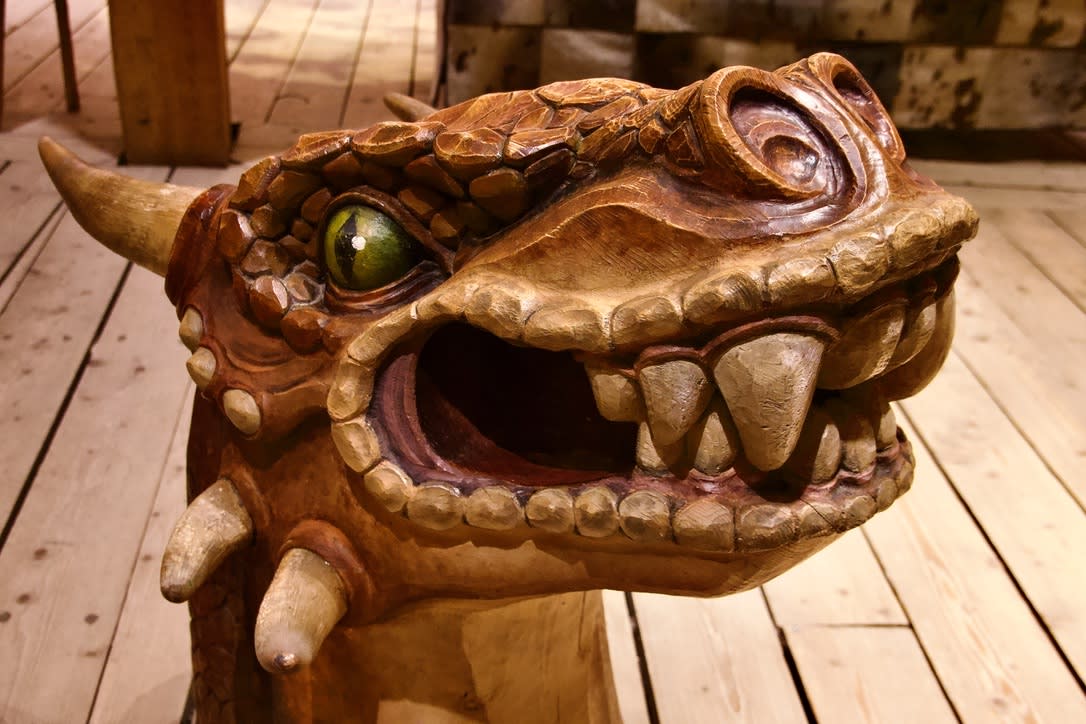
I breathed in that salty Lofoten mountain air, and it was clear to me where freedom is still taken seriously - in the Norwegian mountains. I'd give the Nobel Peace Prize to the people who created, respect, and keep maintaining the rules of freedom in the mountains. It would be an award spanning generations and touching millions of people.
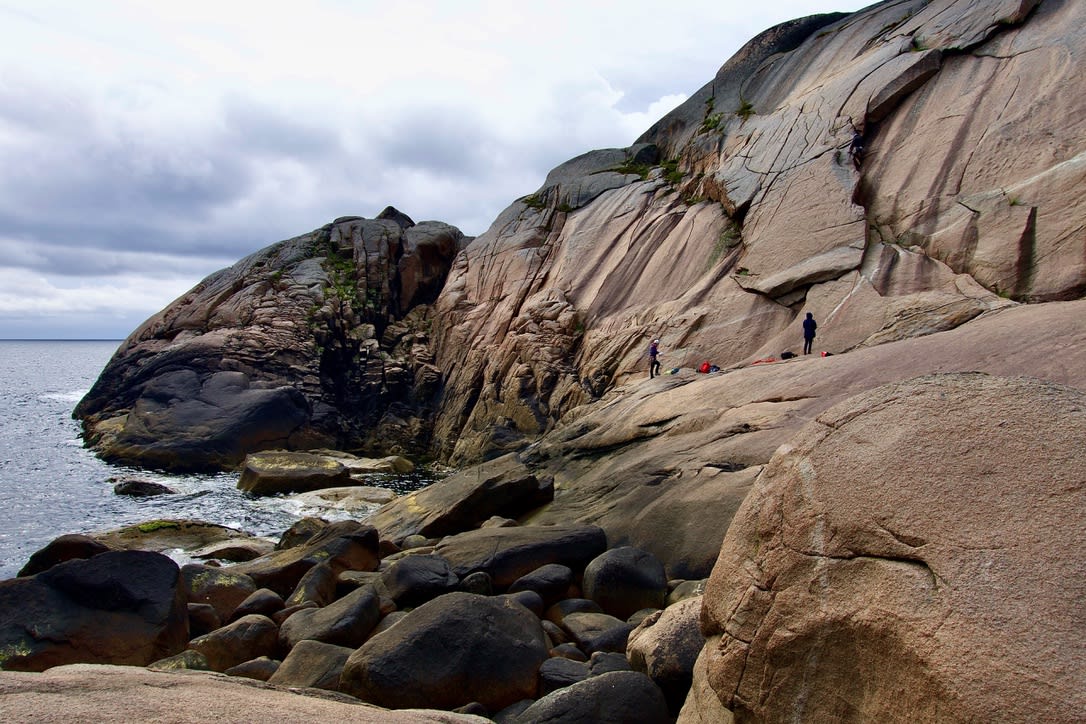
How long can you keep climbing when the sun never sets?
I got the gear ready, and we were looking forward to climbing. Over the following week we climbed classics both old and new, constantly dancing between howling wind, rain, and snow.
Every moment of improving weather had to be seized. Sometimes we'd start up the wall at one in the morning, because those were the only usable hours for climbing. On local crags like Paradiset the bad weather is easier to bear, but on the big walls it was nerve-wracking. There are few bolted routes, like Bare blåbær, for instance, and they're constantly occupied. You can't keep rappelling off your own gear forever once the weather turns. Our most faithful companion was the cold.
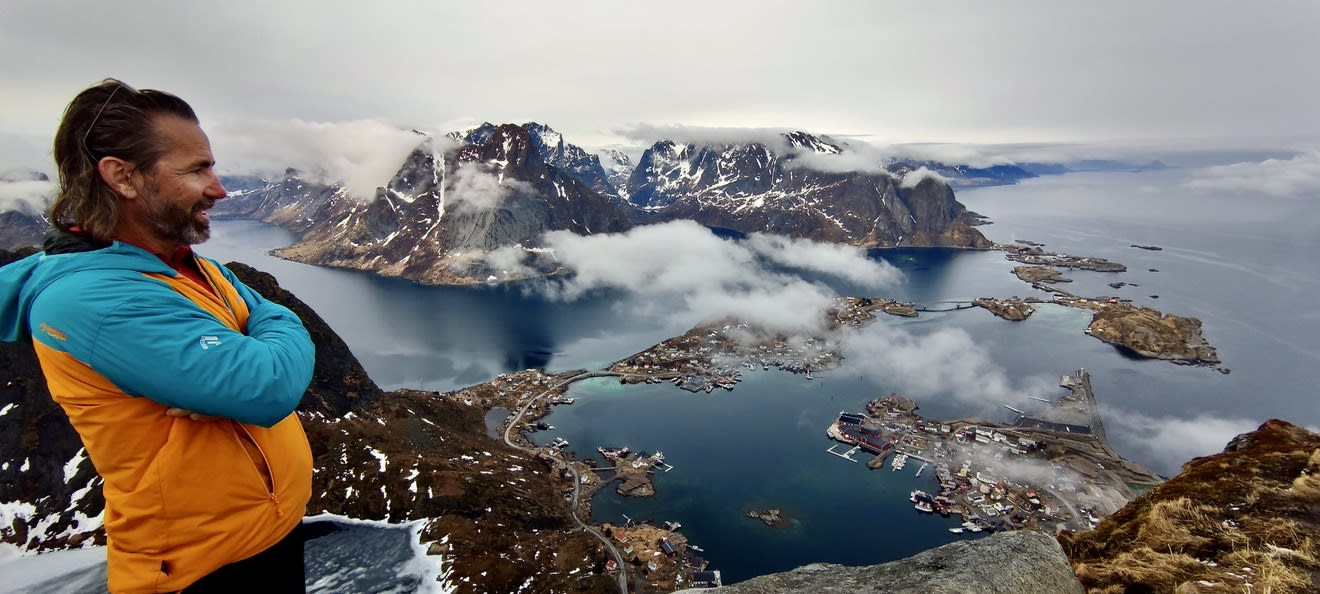
Lofoten has plenty of gorgeous hiking spots. You can climb the stairway to the summit of Reinebringen even in the rain, and it's magical when the clouds break apart for even a moment while you do. But for someone who came to climb, that's not much comfort. The weather stayed cold and unstable, and the forecast promised no change. The good mood was fading, tension was rising. I got a clear assignment: find a place with similar mountains and good weather for the coming days. After some hesitation - expressed in money too - we bought new plane tickets, and left our rorbu empty behind us.
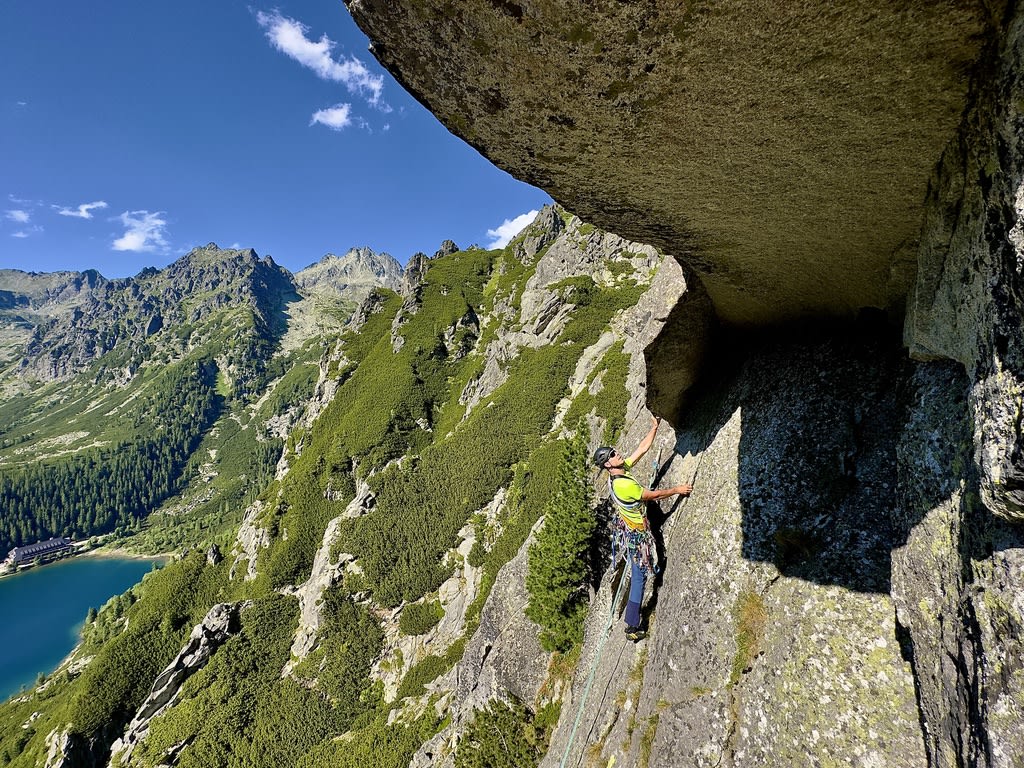
Partway through our Norwegian holiday, we flew home to Slovakia, to the Tatras. On sun-warmed granite walls, a week of stable weather worked wonders on us - the signs of team tension faded away. There's a certain power in day following night the way it should. Descending by headlamp on a warm, clear night has something to it - there's hardly anywhere you feel the infinity of the universe more than in mountains free of light pollution.
Nordic love at second sight
The Štiavnica experience reminded me that I had to go back to Lofoten. I told myself I'd been there at the wrong time. In April the days there are two hours longer than back home, but the high temperature is ten degrees lower. Cold and precipitation are the last things a climber wants in summer - but in the right proportion, they're exactly what a ski mountaineer wants to experience in spring. My hunch turned out to be right. With every day of my second visit, it became clearer to me that my love for that place was growing.
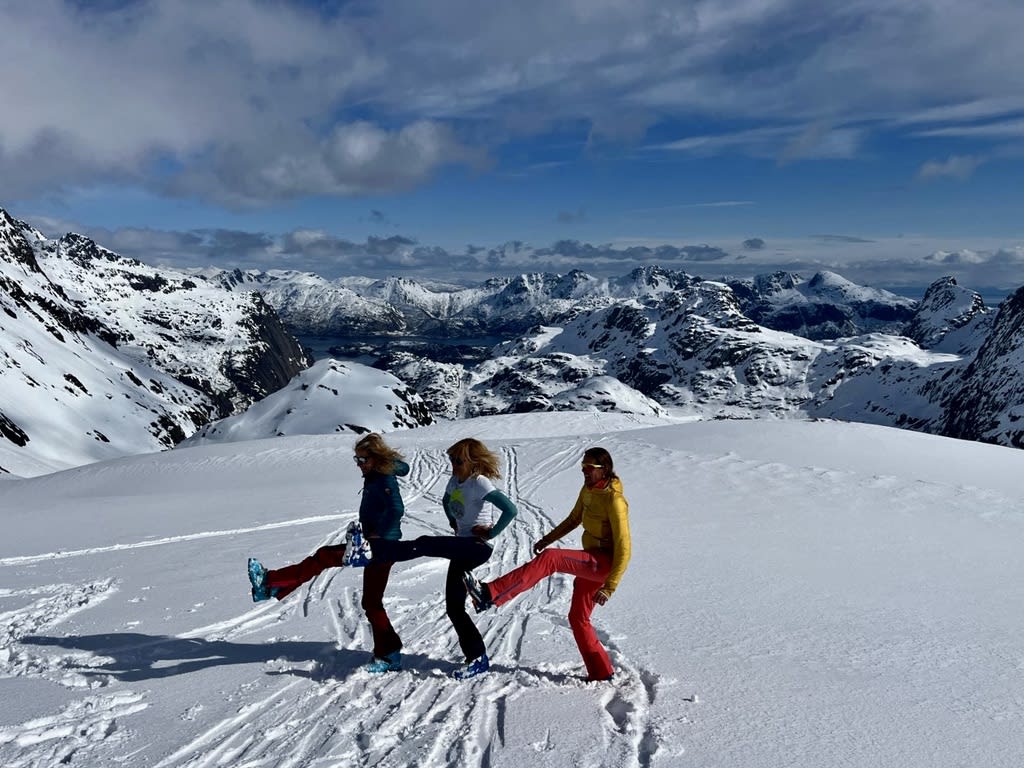
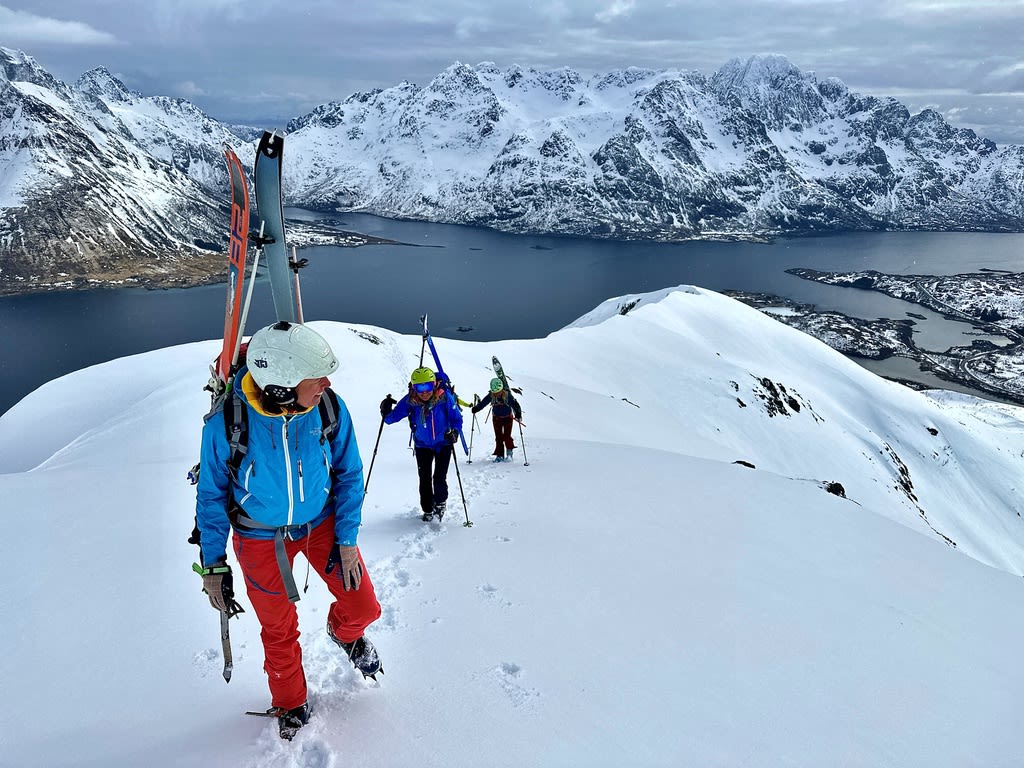
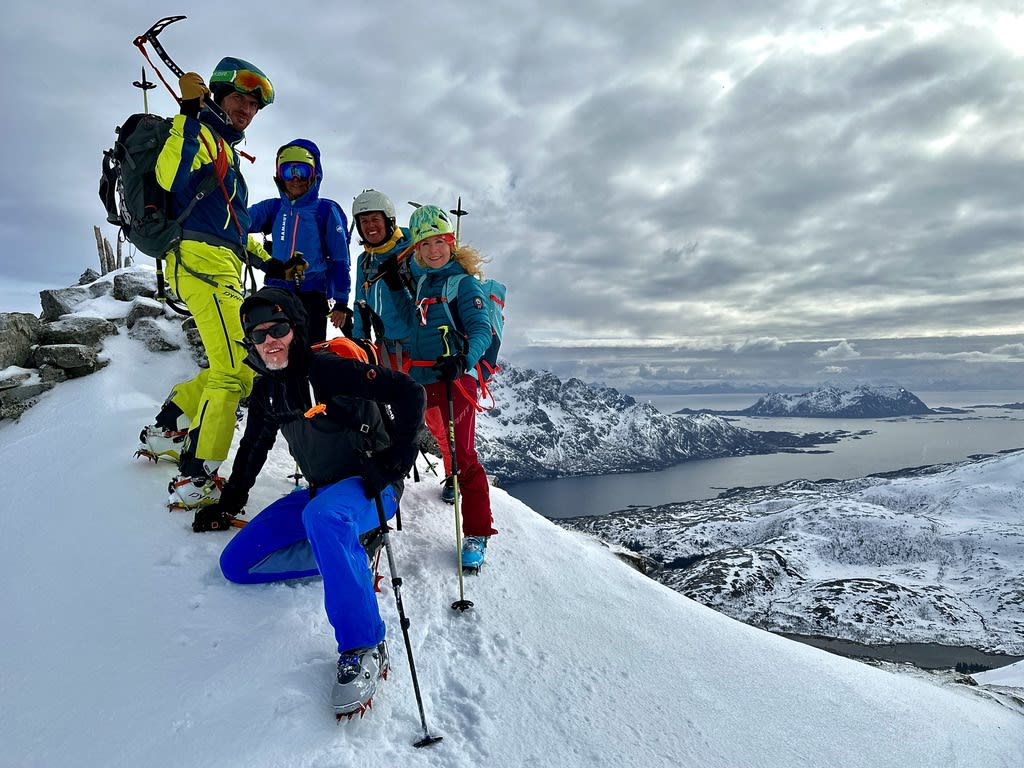
I came back to the islands, and not just any old way - I flew in with a crew of six female ski mountaineers. We had excellent snow conditions, and the weather kept building day by day. At first I thought the girls were being rewarded by the mountain gods themselves. But by the end of the trip, it seemed to me that for a couple of them it might have turned into something more like a defining trial. They had thousands of metres of elevation gain in their legs, and it showed in the group's dynamic. In an all-female team, obstacles get worked through differently than among men - less testosterone-fuelled pressure and more mutual support turned out to be an advantage. Together we handled even the impossible: losing two complete pieces of luggage at the Vienna airport, exhaustion, and fear too. It was fun watching how the male teams out there looked at our group. In the company of six women, the Norwegians' usual social distance visibly shrank - local hotshots and Alpine visitors alike spontaneously struck up conversation with me. Well, what was I supposed to do? I told them that in Slovakia, ski mountaineering is a national sport, and that today women dominate it - even our world champion is one of them. I added that our mountains are just as beautiful as our women, and invited the Nordic folks to the Tatras.
The best ski mountaineering area in Scandinavia?
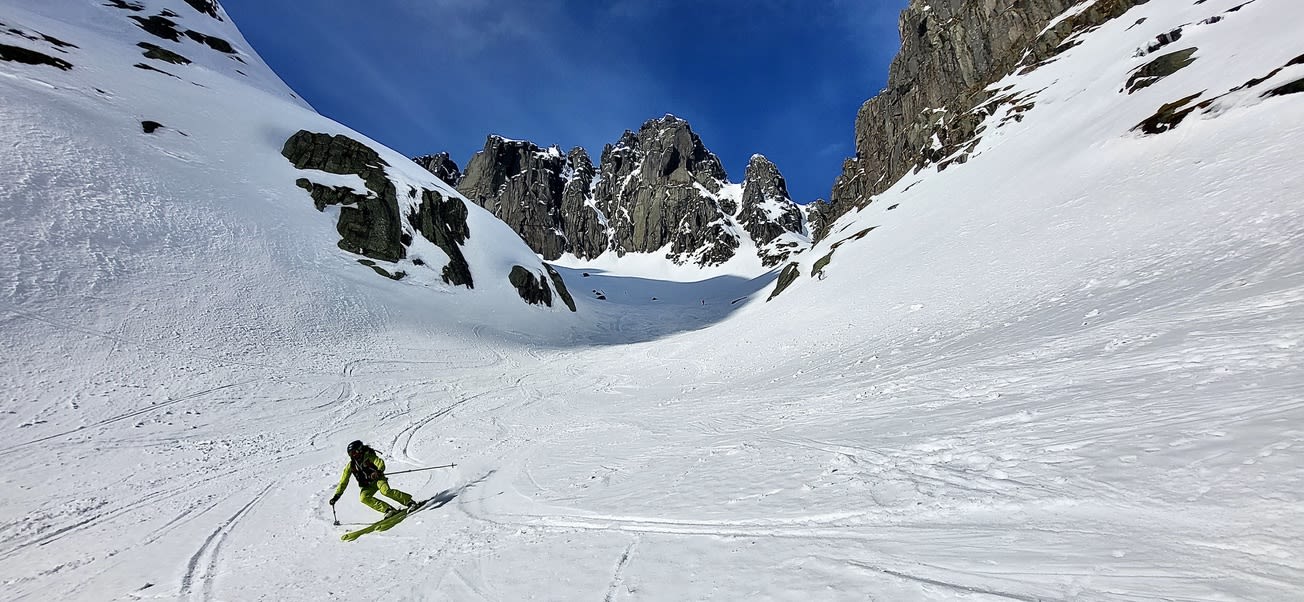
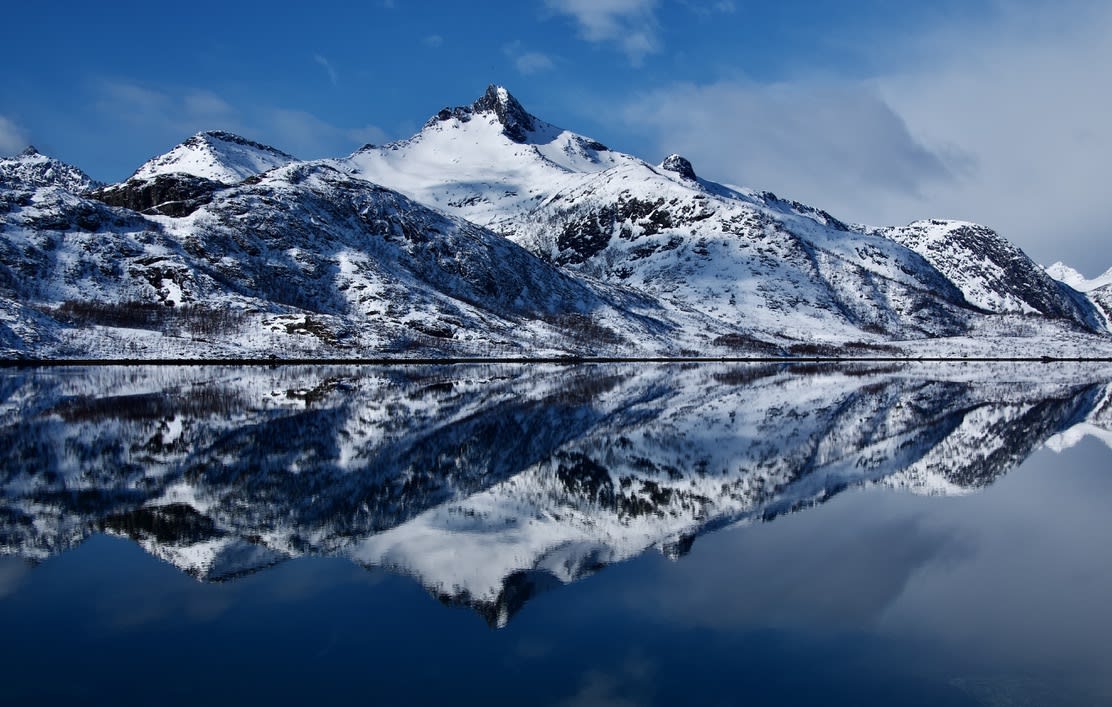
For climbing, Lofoten is a great area for the cold-blooded breeds - but for ski mountaineering, I think it's among the best areas for everyone. Mountains touching the sea, sometimes crowned in winter by the northern lights, are simply exceptional. It isn't about a single parameter, but about how all the pieces fit together. The variety of tours is huge, oriented in every compass direction. You'll find a wide range of terrain types there, and descents of every steepness, some ending right on the beaches. Elevation gains usually don't exceed a thousand metres, and the overall altitude doesn't require acclimatization. The minimal presence of glaciers increases safety and reduces the weight of the required gear at the same time. The avalanche situation tends to be more legible than in surrounding areas, and the long day lets you enjoy the descent in ideal conditions even at a slower pace. Even people who haven't trained all year will get their money's worth here - and at the same time, performance-focused skiers can fit in more descents in a single day. Logistics are manageable - roads, accommodation, maps, and infrastructure all work well enough that a person can focus on the mountains. Timewise, it's comparable to travelling to the western Alps or the Caucasus.
We have a lot of this back home too, practically in our own backyard, so to speak. We can pick and choose only the days with ideal conditions, add excellent food and unlimited drinks on top, and after all that effort you can even go soak in hot thermal springs back home. Only the sea is still a work in progress - parts of Slovakia have been under the sea before, and it could happen again. Right now, ocean levels are rising at roughly 5 mm a year. The trend is accelerating, but you'll still need to be patient. So anyone who wants to see mountains like the Tatras rising out of the sea sooner rather than later has, for now, one reliable reason to go to Lofoten.
More sea, less land
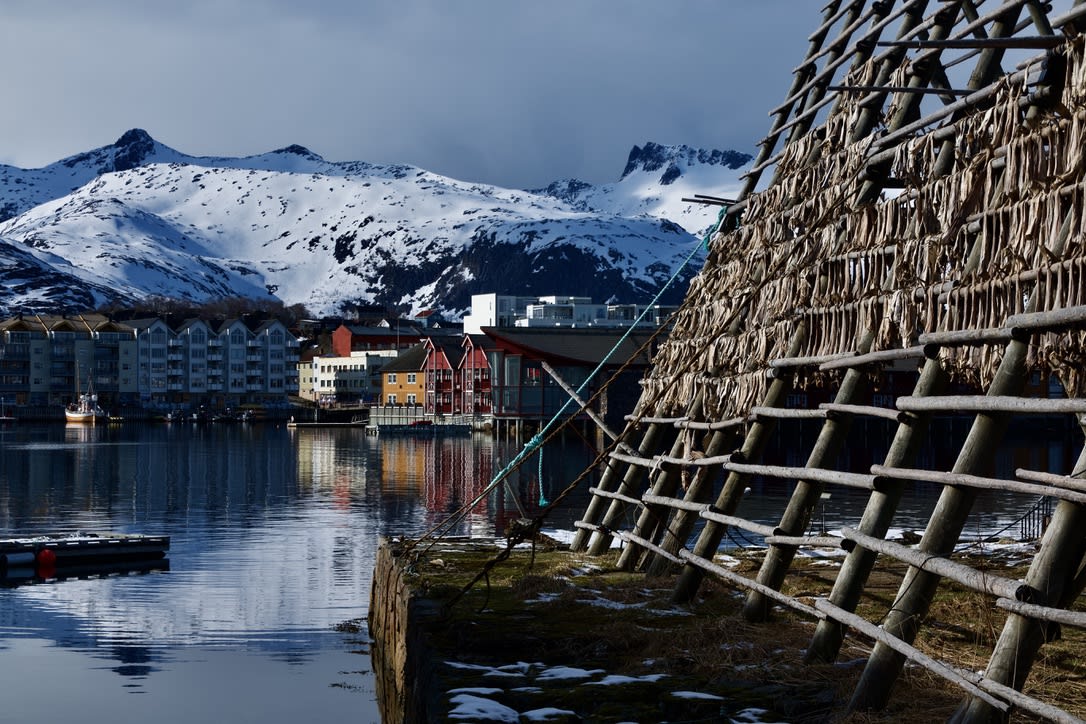
In Slovakia there's more land than sea, but in Lofoten it's the other way around. People there live in constant contact with the sea, and fishing remains the fundamental pillar of life to this day - it isn't just a trade. Fishing shapes the economy, the demography, and the culture. Racks for drying fish are scattered all across the island. Skrei migrate at the height of winter, and the fishing season is dark and cold - demanding seasonal work that, in the past, came with extremely harsh conditions. Fishermen in oiled coats and sheep's-wool hats faced waves, cold water, wind, snow, and ice in small boats. A single rorbu, the kind of small house we tend to stay in on ski touring trips today, was the only accommodation for twenty to thirty fishermen. Every year the sea buried dozens of men, and in some seasons even hundreds. Most of Europe today is pampered by modern life - our apartments have heat, water, and electricity, and we can leave home without worrying about being forced into a van and sent to the front. The sea isn't a military battlefield for us. We enjoy the fight, and life itself might be on the line, but only in peacetime. For the fishermen, the sea was a livelihood, and sometimes a grave. For us, it's a playground - the rules haven't changed, only the reason we go there.
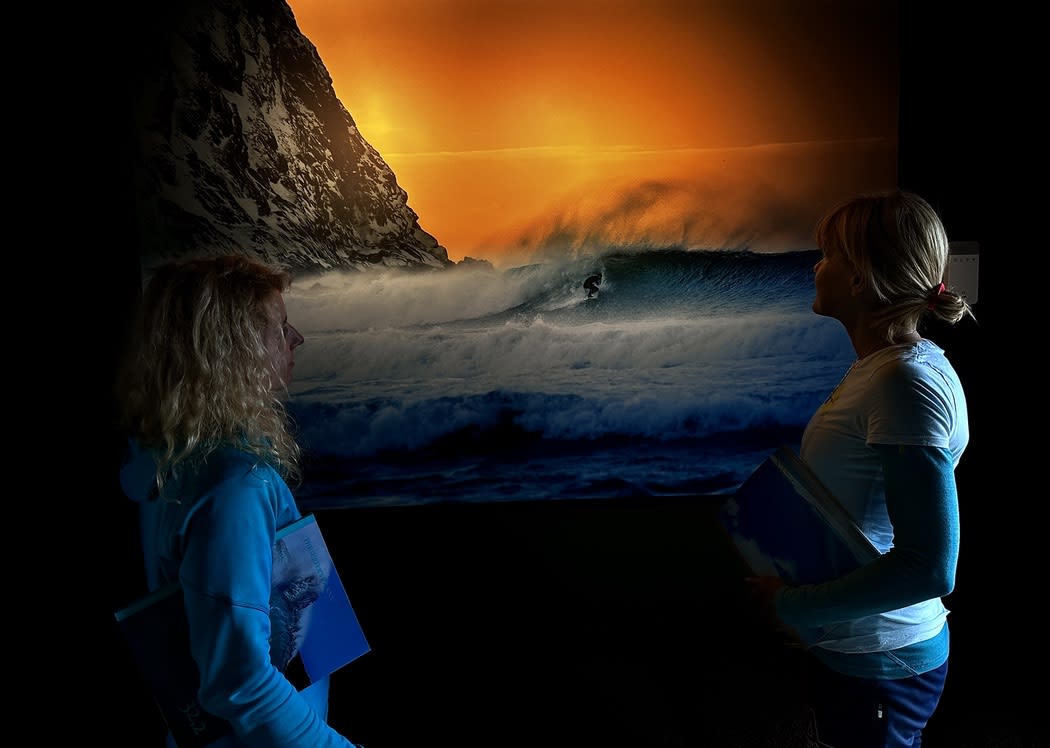
Today a distinctive surfing community from all over the world gathers in Lofoten - distinctive because the right waves come in winter. The water is between 0 and 5 degrees, and that isn't for everyone on a surfboard. The film "North of the Sun" beautifully captures the polar night in a remote surfing bay. It isn't only fishermen and surfers who have their own playgrounds in Lofoten - divers do too. Moskstraumen is among the strongest sea currents in the world, and drift dives through the kelp forests are unforgettable, as is swimming with orcas. Ski mountaineers don't lag behind in making use of this marine playground either - sailing a small boat into mountain fjords and then skiing down from the summits is called "sail and ski." You need to be on good terms with the sea, the mountains, and the whole ski touring crew alike - there's little space on the boat, and it belongs to everyone. The comfort of today's boats can't compare to what the fishermen had in the past, but seasickness is still exactly the same. So something has to be sacrificed - but the sea opens up places you couldn't otherwise reach.
So Lofoten definitely also offers a challenge we don't have in the Tatras. As a divemaster, I have just as strong a bond with the sea as with the mountains. It was clear to me that I wanted to see certain spots by boat, so together with the head of a partner travel agency, we put together a gender-balanced crew for the voyage. The team was made up of two already-veteran members of our expeditions and three newcomers. As always, I held a weekend get-together in the Tatras for everyone beforehand, with the goal of preparing them for both the good and bad alternatives on sea and on land - with good reason, since in some places the team has to rely only on itself. Even mobile phone signal doesn't reach there.
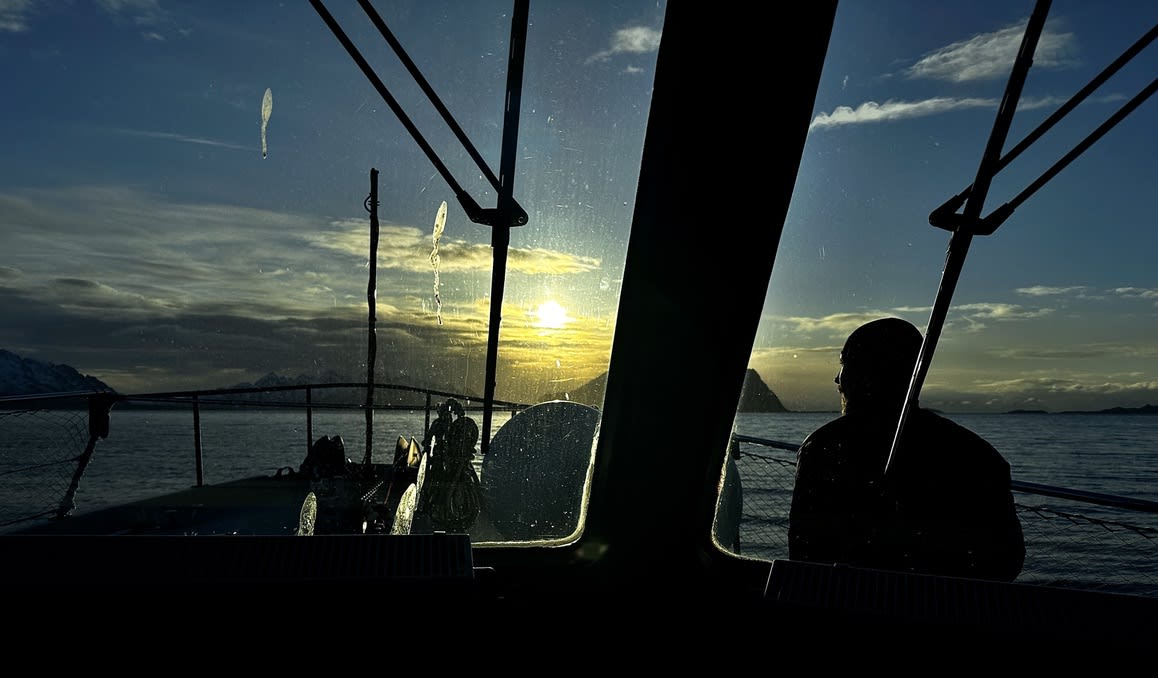
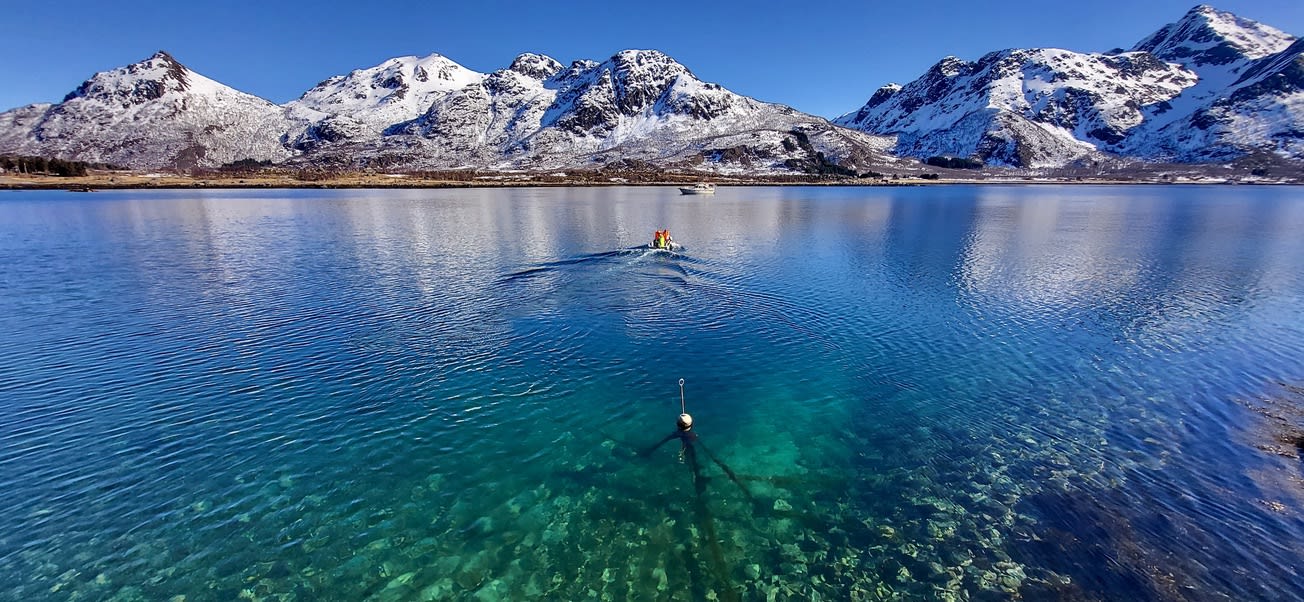
The arrival was dramatic. Lofoten didn't disappoint - because of a gale, the bridges between the individual islands were closed. Everyone was glad there were six of us in the car, since that made the chance of getting blown off the mountain roads a little smaller. We couldn't even make it to the harbour. After an improvised but very pleasant overnight stay, once the wind died down, we could finally settle into the two small cabins of our boat. A week of sailing followed, with the sea like a mirror. We anchored wherever we pleased, and thanks to the team's cooperation and discipline, we could afford to go completely off the described and known routes. Our ski tracks were the only ones for miles around. It wouldn't surprise me if we left behind some first descents on those islands.
From A to Z – the circle closes in Å
I still like coming back to Lofoten. I stay humble about it - I've accepted its extremes: climatic, logistical, aesthetic, and in price too. It isn't just a gym for me to improve my personal limits - I take it in as a whole, together with the people who live there. I have a few acquaintances among them by now. I like the architecture of certain villages. I've visited galleries there, clubs that occasionally have a local band, museums recalling the history, and one remarkable glassworks. I know the local restaurants, as well as the saunas where you can jump into the sea to cool off. I know about the "Japanese" little forest, where the skiing in powder is excellent when the avalanche danger is extreme. I always try to help my fellow travellers discover all of this too. We usually end up in the westernmost village, called Å - from there you can only continue by boat. Sailing along the same latitude, the nearest landmass from there is Greenland. Once you're already in Lofoten, you have to enjoy whatever you can, because just having the chance to experience that place is already a privilege. It personally took me a long time before I managed it.
The girl who used to write me those postcards later got married - for love. I don't know whether it was love at first sight or second sight - it doesn't really matter. Today she has big, beautiful children. Some things only reveal themselves once you no longer need to keep going - like in Lofoten, in Å.
Ski touring in Lofoten – April 2027
At the start of winter, a veteran of our expeditions asked me whether I could put together some ski touring exotica to close out the season. Where it would be, he left up to me.
We fly out to Lofoten from Bratislava. We climb slowly, and ski joyfully.
We still have a couple of spots left on the team. The total cost is €2,000. If you'd like to join and find out the details, get in touch by email or phone.
You can watch an authentic video report from the women's ski touring trip mentioned above, by Radka Podaná, here.
This page has been translated using AI and may contain errors.