
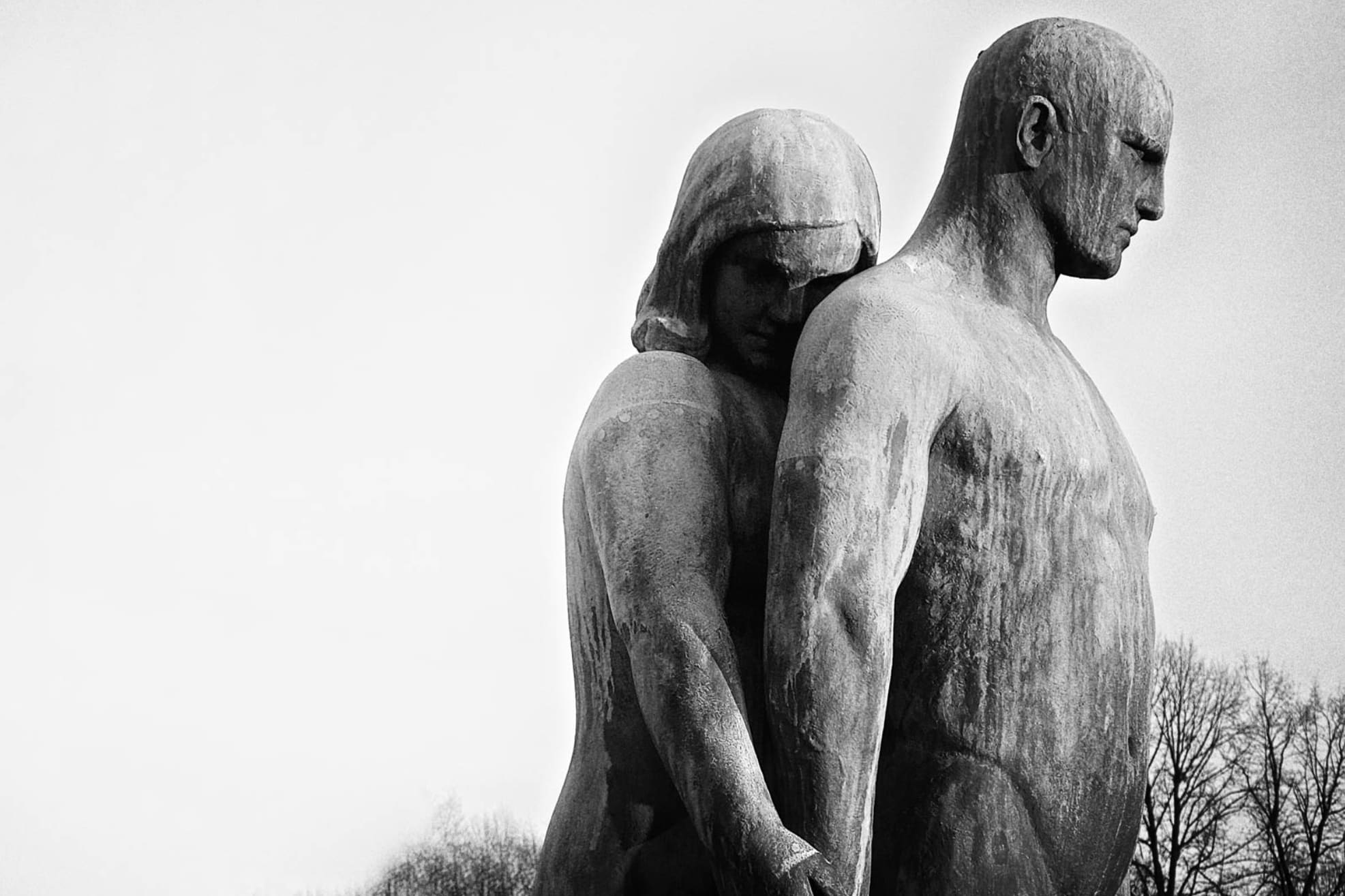
Psychotherapy
A person's life is like a journey through a mountain landscape. Sunsets, when we stand on mountain summits, alternate with spells of gales, storms, and bitter frosts with zero visibility. Moments when we don't know which way to go next are the critical points of our journey. Stepping onto an unstable snow slope, or a poorly bridged glacier, can mean falling into a crevasse or triggering an avalanche. It isn't the therapist's job to decide which direction our path should take next. Their fundamental purpose is to be with us when we don't know what to do next - when, utterly exhausted, we stand at a crossroads of mountain trails, or when we've completely lost our bearings. When we doubt our own climbing partner, or when that partner is no longer there. Night is falling, and alone, we're afraid of the freezing mountain night. Nights like that tend to be very hard, and often seem endless. That's when it's good to have someone beside us who understands our situation and stays there with us. Then, when morning comes and we feel the first rays of sun on our face and the landscape around us comes alive with colour, the direction and trace of our lost path often reappears too.
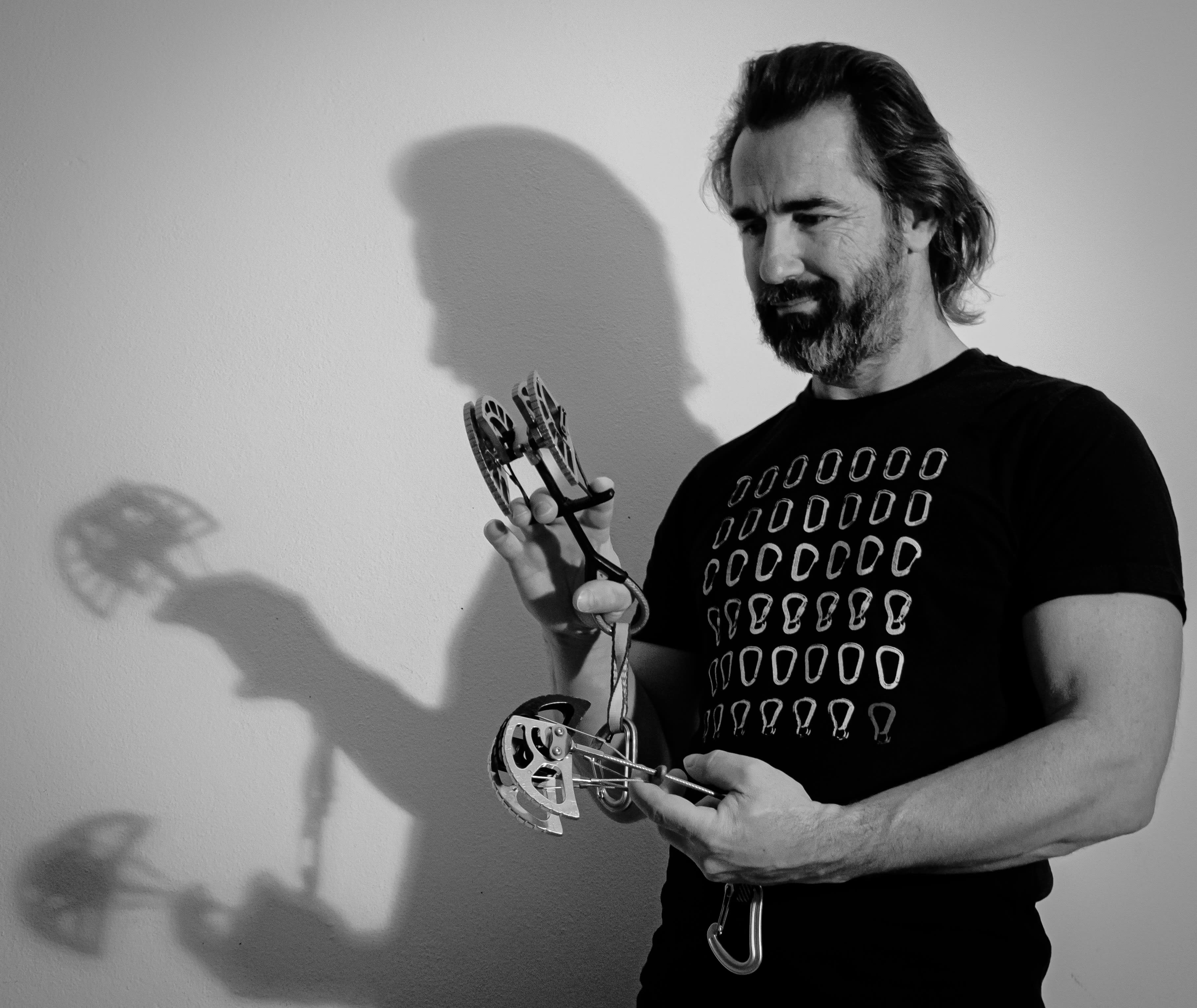
In our organization, I (Martin Murár) am the only one who does psychotherapy and counselling. Let me try to explain the way I work.
A century-old case study
Perhaps William Brevoort Coolidge went through something similar. He was a weak, sickly boy. Doctors recommended mountain air to improve his health. At fourteen, his caring aunt Meta took him to the Alps. There the two of them started taking trips into the mountains. The boy gradually grew stronger, and after a while he was able to start climbing in the mountains too. He gained courage, endurance, a healthy self-image, and maturity. He studied at Oxford and wrote several books. He completed more than six hundred ascents, thirteen of them first ascents - several together with Aunt Meta, who started climbing at 40 and later became the first woman to climb the Matterhorn. Willi became one of the most successful mountaineers of his time. He died at 76 in Grindelwald, Switzerland.
In the High Tatras we can also find certain elements of adventure-based therapy in the approaches of Dr. Mikuláš Szontagh and Dr. Michal Guhr.
Adventure based therapy,
as it's known internationally, is the way I work in our organization. I've developed it further and enriched it with my own experience. Everyone who sets out on this path with me experiences it in their own individual way. Together we set the direction and pace, taking into account the situation and needs of that particular person.
Land of Inspiration
One of the defining features of my approach is going all the way into a space that a person, from the standpoint of how they perceive their own abilities, considers to be their limit - a space they might never have dared enter on their own. Yet it's an area that holds an immense degree of appeal, lying in the possibility of uncovering a significant source of purely personal, inner strength.
With every single situation a person experiences on this path, they're confronted with themselves. Many of these they perceive as life-threatening, and face their own doubts about whether they can handle them. In that state they have to mobilize all of their psychological as well as physical strength. It's precisely in moments like these that they discover hidden reserves of both. This isn't about coping with one short-term strain, but rather a sequence of events of escalating difficulty, whose successive mastery is reflected in a steady growth of strength.
It's a path of gathering strength and belief in oneself - of discovering a different perspective, a different angle of view: on oneself, on the space one finds oneself in, and on what one considers to be the problem. A person learns to identify, and gradually tear down, the walls of their own prison, and to discover the vastness of the landscape lying beyond this "safe," but often confining, zone.
Living through this permanently shapes a person's character. The therapeutic intention is for this process to produce changes that support personal development - changes that, even though the experience behind them is intense, are accepted and understood in keeping with that particular person's own nature.
I consider applying the findings of contemporary neuroscience and evolutionary psychiatry to be key to my work. In developing my approach I was inspired above all by Milton H. Erickson, V. E. Frankl, A. Maslow, M. Csikszentmihalyi, H. J. Eysenck, C. G. Jung, and Erik Erikson.
The mountains have enormous potential for shaping a person. But the mountains alone are sometimes not enough. Here too the rule applies that what matters isn't only where a person is and what they're doing, but above all with whom, and how, they're doing it. Despite the philosophy I apply in my approach, the actual level of risk in my programs doesn't exceed the level of risk in everyday life. In other words, you'll usually be taking on more risk driving home from the Tatras than during the program itself.
Indications
Experience confirms that the way I work helps especially with:
- relationship, partnership, and family problems
- work-related problems and excessive work-related exhaustion
- depression
- psychosomatic problems
- problems touching on self-image and identity crises
- complications in the child-parent relationship, or the child-social environment relationship
- substance and behavioural addictions
- psychological self-care for helping professions (doctors, psychotherapists, healthcare workers...)
The times and the space we live and work in provide most of us with sufficient existential security. Often, though, as this outer comfort grows, a sense of lacking or missing inner comfort grows right along with it, in direct proportion. For a meaningful life, we need to feel that, just as we're developing our outer reality, the strength and clarity of our inner reality is growing too. On the path of self-discovery, we often don't need to "admit" (to ourselves or to anyone else) that this is an act of psychotherapy. Because what is it, really, at its core? For a certain time, openly welcoming into our space someone who observes, thinks, and inspires alongside us - someone who helps us in our individual effort to seek out and fulfil the meaning of our existence.
Frequently asked questions (FAQ):
This page has been translated using AI and may contain errors.