
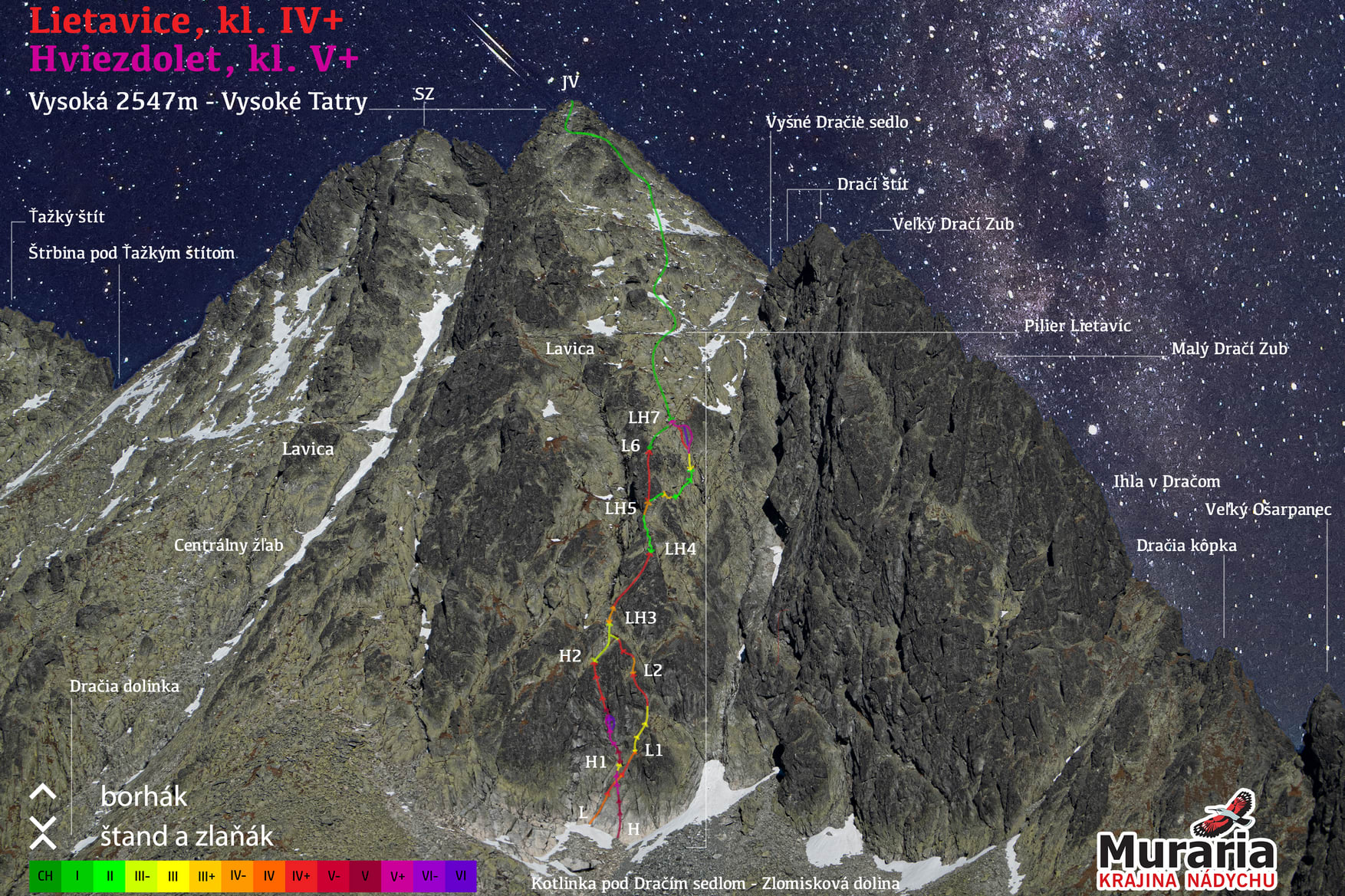
Lietavice, grade IV+, Vysoká 2547 m
A south pillar leading to one of the highest, and also one of the most beautiful, peaks in the Tatras
Characteristics
A challenge for Tatra beginners
For beginners in the Tatras, Lietavice is a big but achievable challenge. As far as placing your own protection goes, you can give it a try once you've already "led" at least five single-pitch routes on Anjelský hang without hesitation. That alone isn't enough, though - you also need practice climbing multi-pitch routes. Ideal routes for gaining that are, for example, Protiprúd, grade III, at the Skok waterfall, Žriedlo, grade IV-, on Strelecká veža, or Jubilejná, grade IV+, on Velický zub. The ability to navigate and knowledge of the terrain also matter. The 2.5-hour approach to Pilier Lietavíc represents a typical Tatra standard. Zlomisková dolina is plenty big enough to get lost in. So plan on needing to be able to find the start of the route before you even begin climbing.
The best time for less experienced climbers is the part of the season when the wall is already free of snow. Even then, though, an early start and good, stable weather are essential.
A gem for climbers with basic knowledge of traditional climbing
Every anchor sits on two stainless-steel bolts connected by a chain. The placement of fixed protection is minimalist, and often serves more of a navigational function. Most of the climb has no protection bolts at all. The rock offers rich, high-quality options for your own protection. Cams and slings work best. From the upper anchor of the seventh pitch, reaching the summit calls for route-finding ability and some confidence moving on grade CH, I, and II terrain. You can rappel the whole route without complications with a 60-metre rope. Excellent climbers can climb Lietavice even in approach shoes. But the secret tip for real connoisseurs is comfortable climbing shoes. Early in summer, thanks to large snowfields, the climb has the glacial atmosphere of the great Alpine or Caucasian peaks. In this exceptionally beautiful period, knowing how to use crampons and an ice axe is essential.
New options for experienced climbers
The Lietavice route on Vysoká allows:
- climbing "light," with only approach shoes on your harness, or even without them at all - in that case, climbing gear can be left at the anchor after finishing the seventh pitch, and the summit reached on foot
- traversing two summits after the pillar climb, then returning via the standard route to the starting point above Dračie sedlo
- a new variant of the Crown of Vysoká (Dračí štít, both summits of Vysoká, and Ťažký štít), enriched with climbing on rock of exceptional quality and beauty
- a mountaineering crossing of two valleys at your preferred difficulty (via Sedlo Kohútik, an interesting chain-secured descent leads into Kotlinka pod Váhou)
- climbing two Tatra routes in one day with no need to relocate
- a rappel descent from Vyšné Dračie sedlo
Besides Vysoká, it's also a good alternative approach to routes on the Dračí štít massif.
Lietavice is not suitable for climbing teams without mountaineering experience!
If you lack the experience, bring a climbing instructor, an experienced climbing friend, or a mountain guide for this pillar.
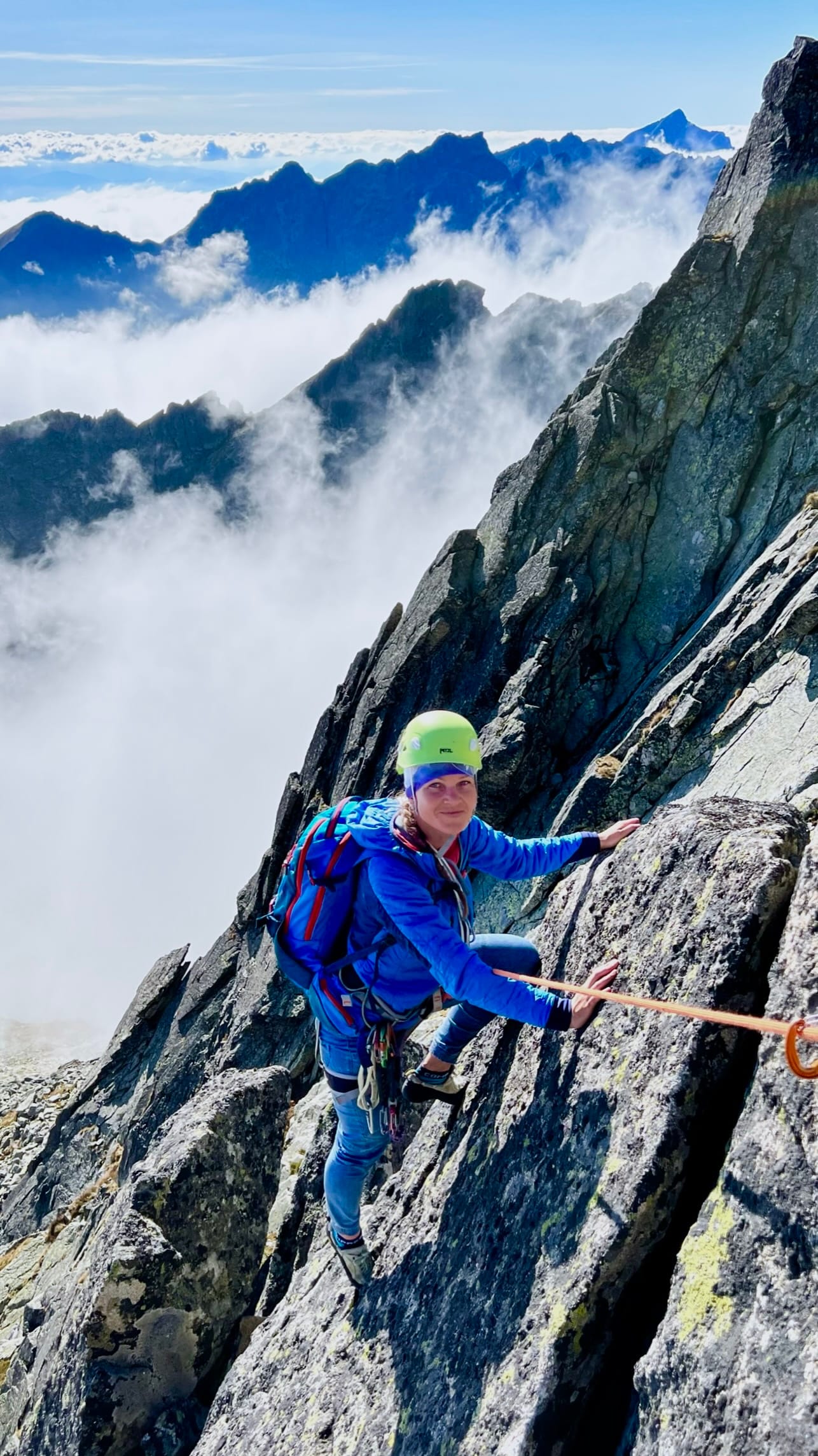
Approach to Pilier Lietavíc via Zlomisková dolina (2:20 h):
The simplest way to reach Pilier Lietavíc is via Zlomisková dolina. From Popradské pleso we follow the main trail toward Sedlo v Ostrve. After about three minutes, at the warning sign prohibiting entry, we turn left into Zlomisková dolina. Alongside the roaring Ľadový potok stream we first cross a small concrete reservoir, then a wooden footbridge, and then walk through a grove of stone pines that look like giant bonsai trees.
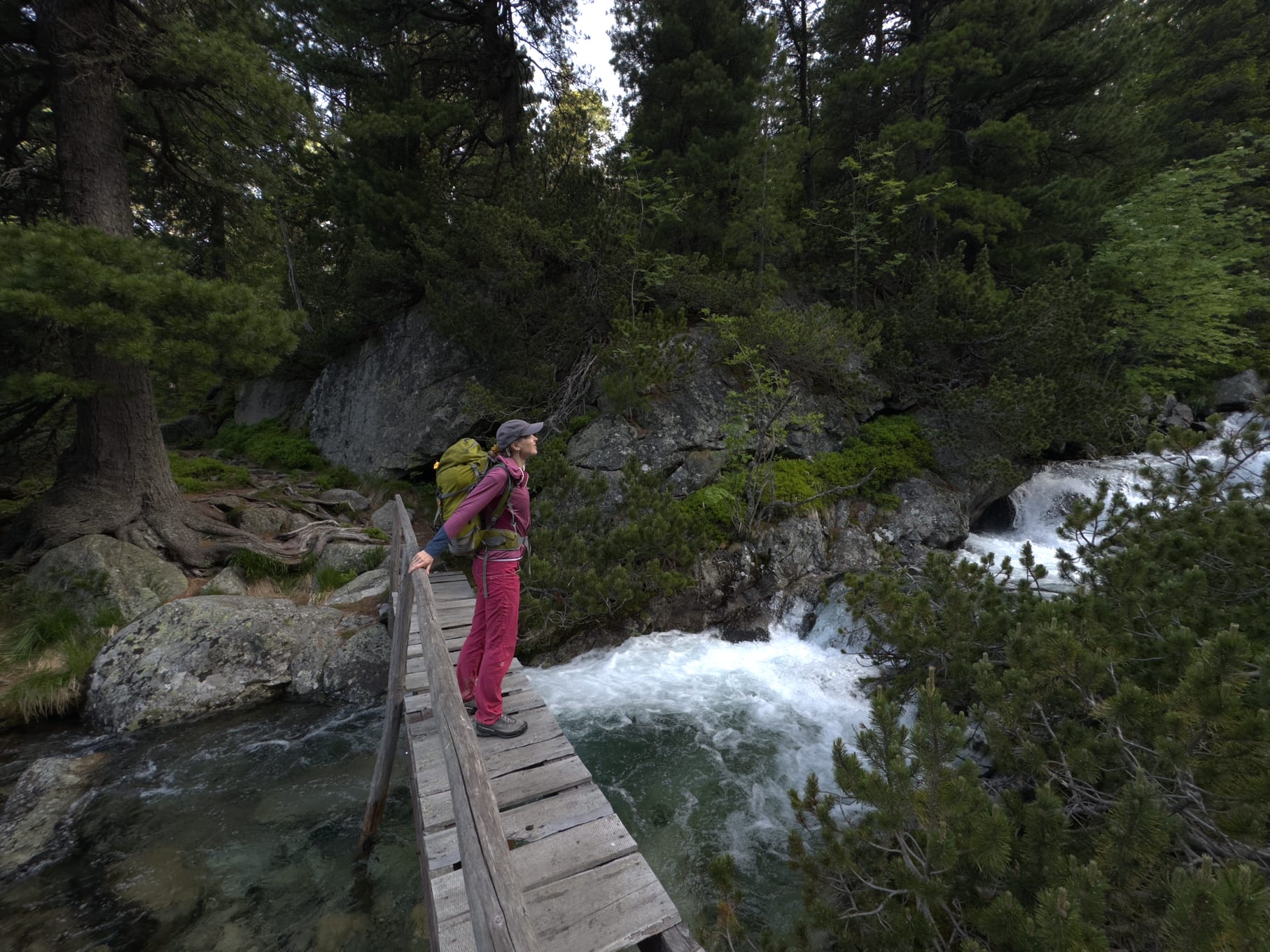
Above the first slope - by now we're well above the treeline - on a meadow often not just in bloom but also boggy, called Zlomisková roveň, we first continue toward Ľadové pleso. If, at the start of Zlomisková roveň, right past the top of the slope, we look at Vysoká, the less prominent Pilier Lietavíc sits directly below its summit's fall line.
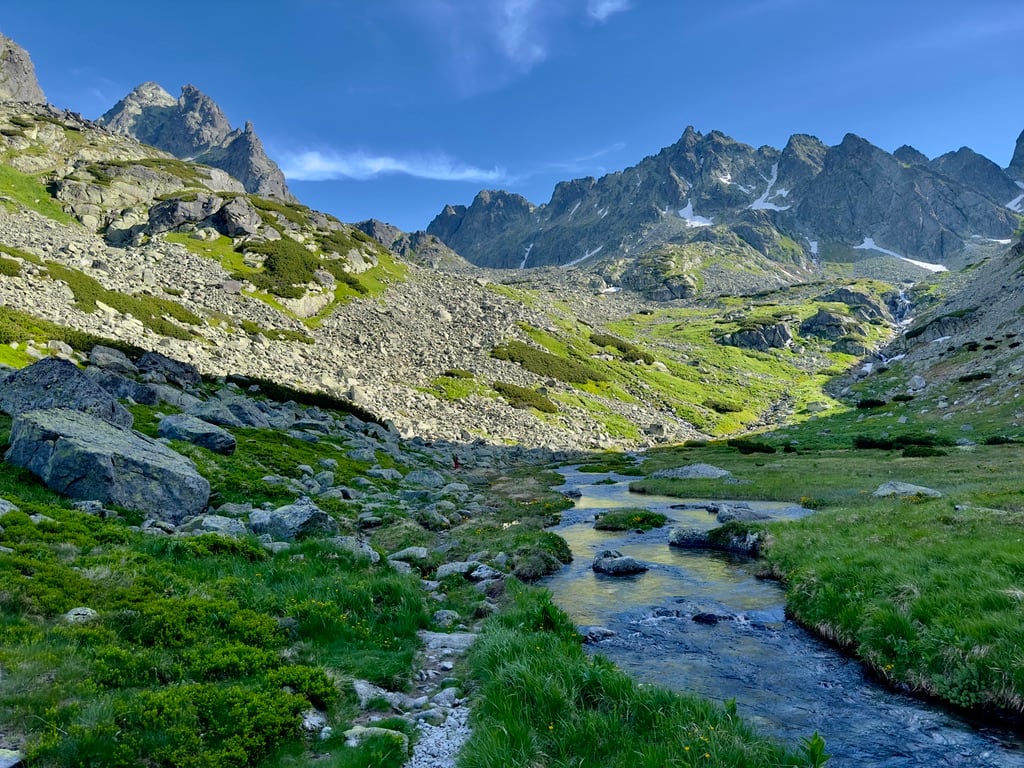
From there we continue on nearly level ground along the left side of the stream. Roughly halfway across the meadow we turn left, following Rumanov potok. We climb more steeply through the second slope toward Dračie sedlo. Rumanov potok disappears into the rocky moraine here. There are several trails toward Dračie sedlo from here. It's best to stay slightly to the right, the same way as for the approach to Ošarpance. We don't go into Dračie sedlo, and we don't cross it either. We stay on the south flank of the mountain the whole time. High above the notch, at roughly 2280 m, is the base of a triangular, water-worn wall of light-coloured granite, below which a snowfield sits all summer long.
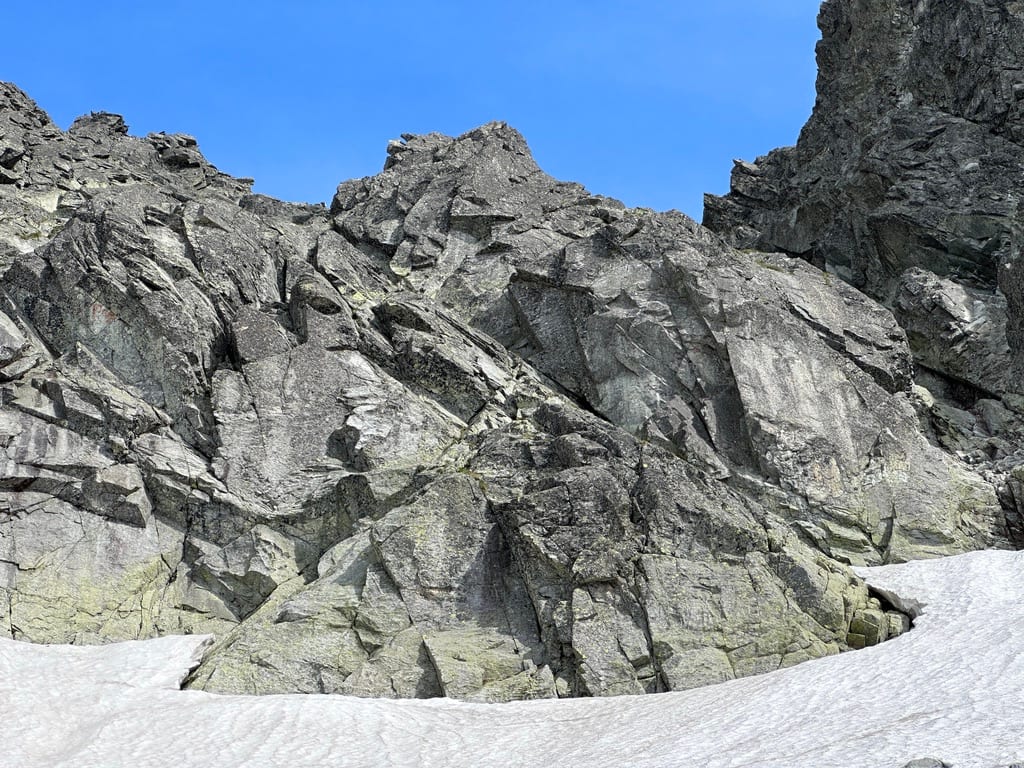
Both climbs run up this wall. Opposite our wall, the start is decorated by two merging Dragon Heads, and to the southeast by the three towers of Ošarpance. It's a gorgeous spot.
A bergschrund lines the base of the wall roughly until mid-August. Crossing it may require crampons and an ice axe.
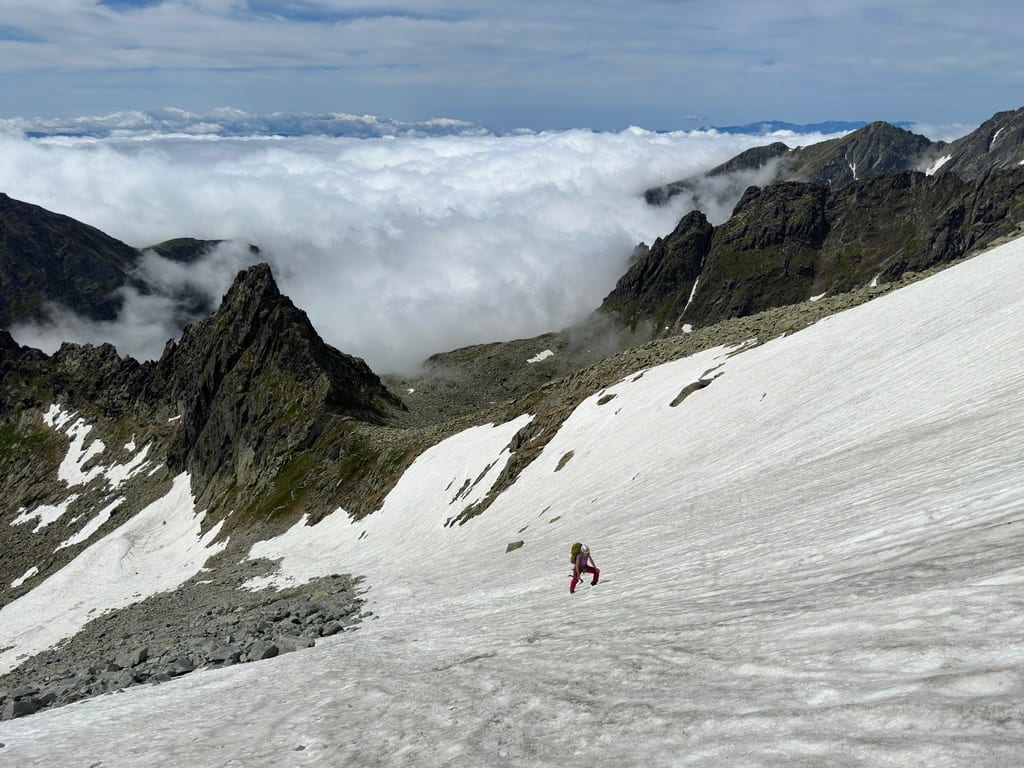
The routes' bolts are visible from the start. Hviezdolet runs straight up the small wall on the right, Lietavice up a low-angle ramp on the left. At the bottom they're about 9 metres apart. The routes' first pitches cross each other higher up.
At the start below the wall, climbers are often sheltered from the wind. On sunny days the rock warms up and creates an oven-like effect. Don't let that tempt you, though - the felt temperature higher up the pillar and at the summit tends to be colder. At least a hardshell windbreaker can come in handy even in the warmest summer.
Route description
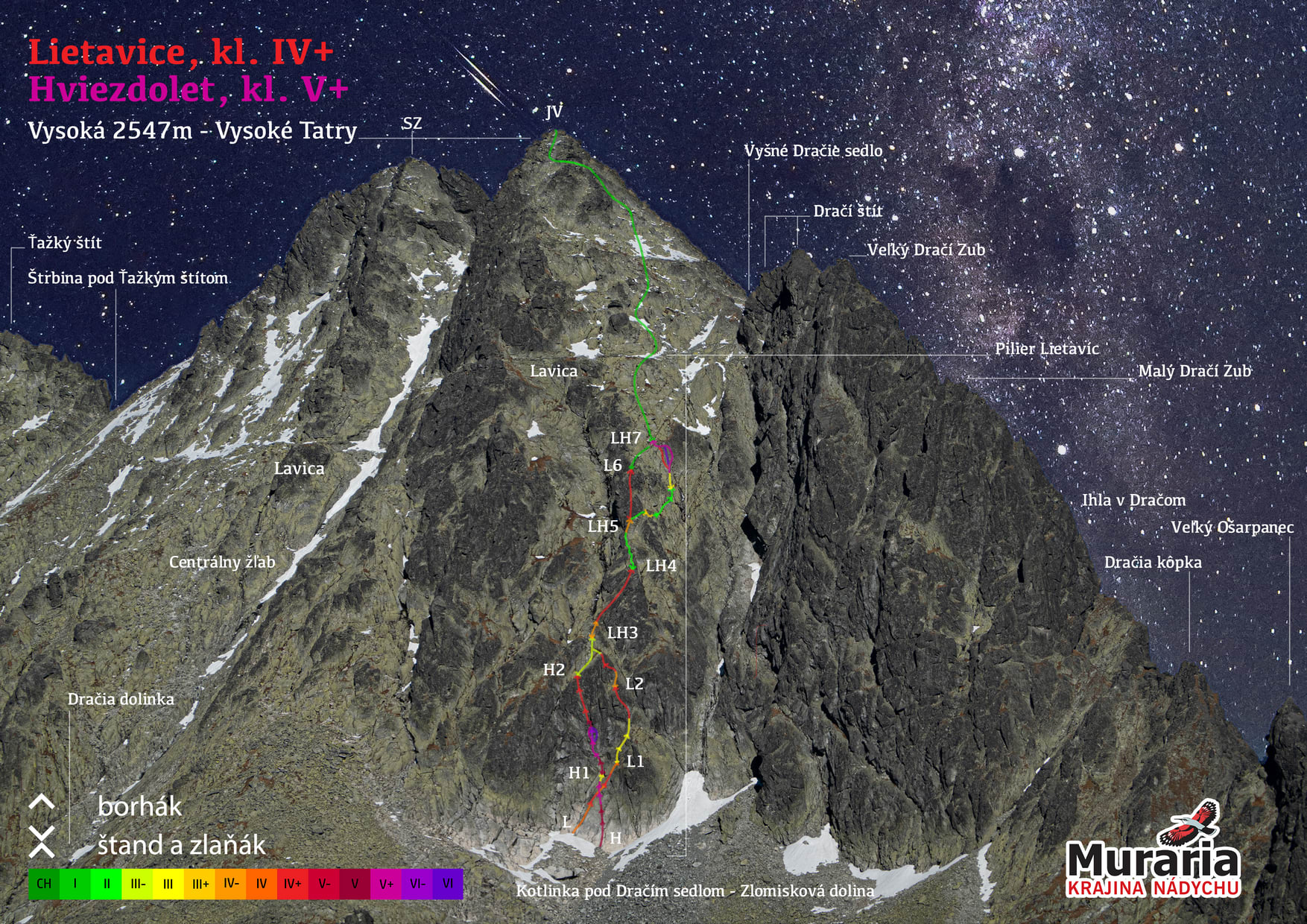
The central gully of Vysoká is bordered on the right by a distinct, if in places broken, pillar running all the way to the summit. The Andráši-Proško-Puškáš-Roubal route and their loved ones' route from 1950 runs up it. To its right, separated by a small channel ending down in the wall, Pilier Lietavíc usually rises out of a snowfield. Compared to the "main" pillar, it's shorter and less distinct. It ends on walking terrain, roughly a hundred metres of elevation below the SE summit. Here it likely meets the first ascensionists' route from 1874. On its right it's bordered by a distinct gully connecting the Vysoká massif with Dračí štít. Komarnický's route to Vyšné Dračie sedlo from May 1917 runs up it.
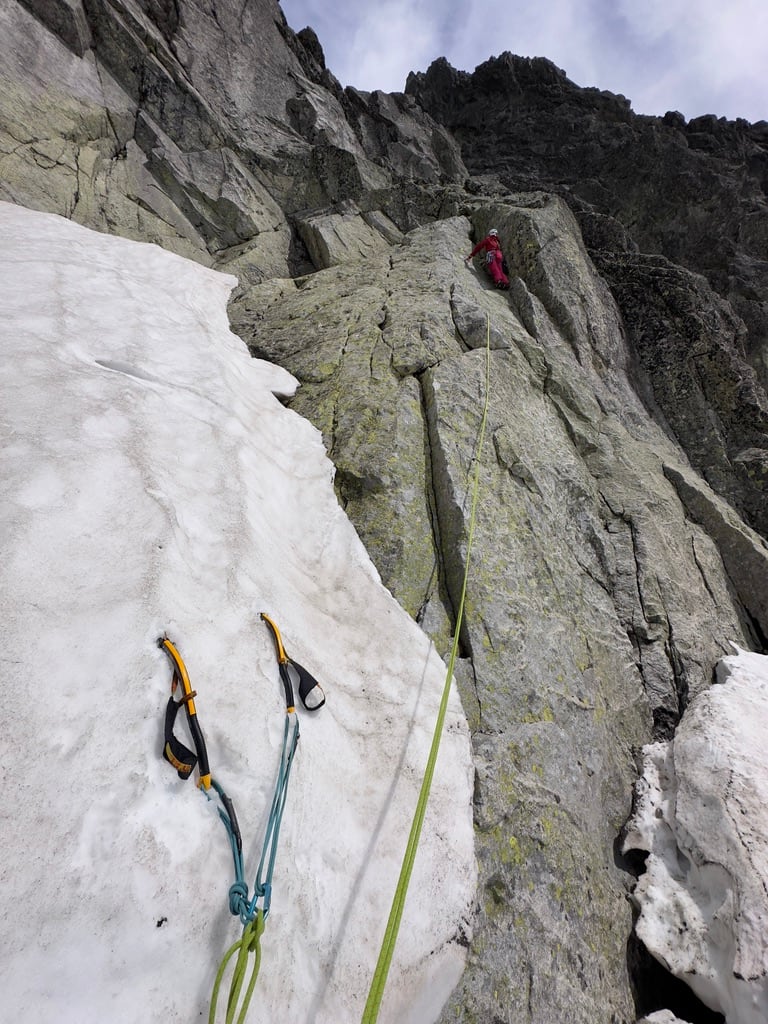
Pitch 1, grade IV+, 29 m, 2 bolts
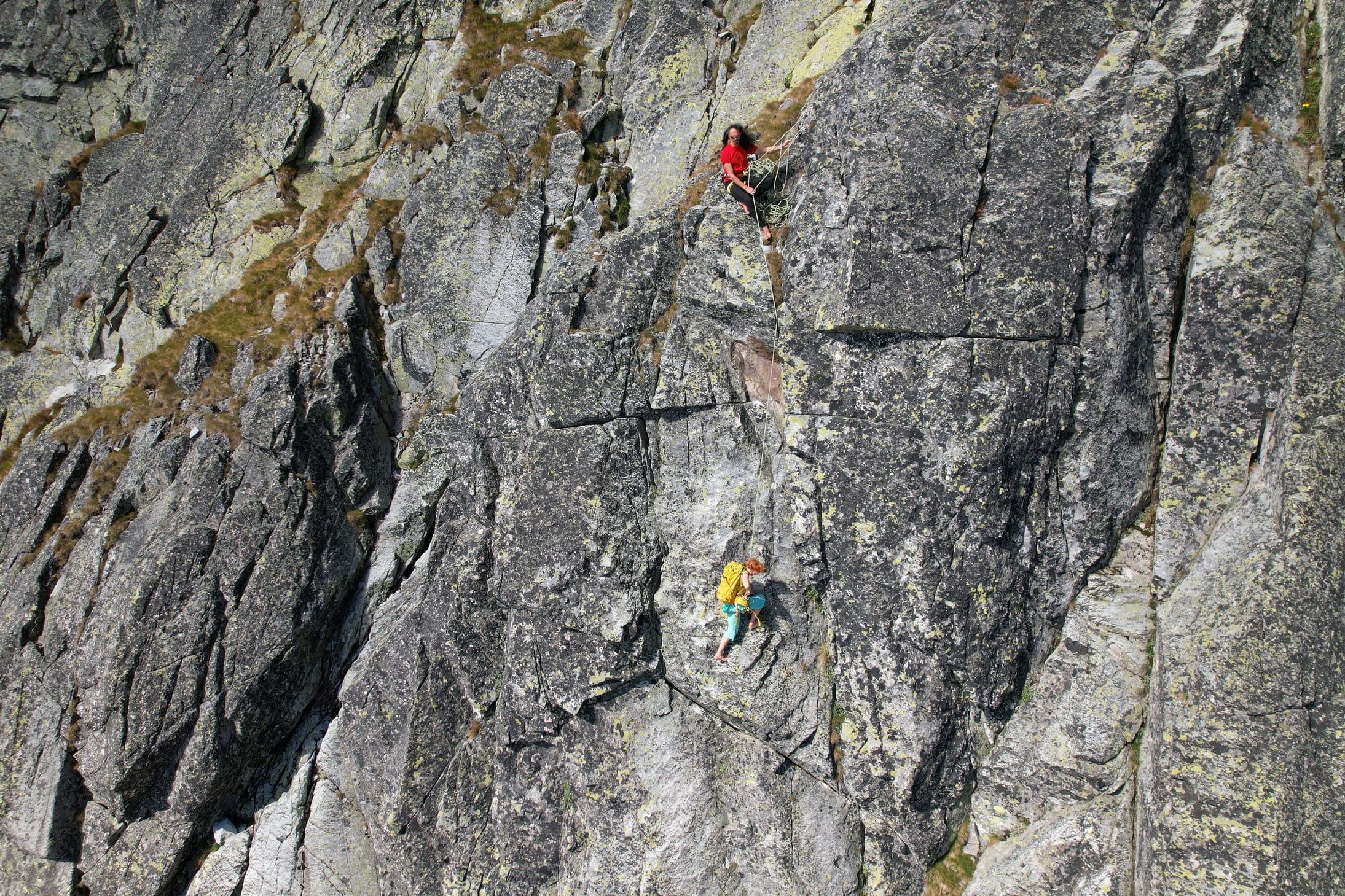
The start is a distinct corner (2 m). We don't continue up the corner, but climb a small wall with distinct cracks (cams) to the right of it (IV). The terrain here forms a rounded arête - a mini-pillar. Close to this arête we climb to the first bolt (IV+). From there we continue another 13 m to B2 (IV), and then up a small corner to the anchor on the right (IV+). From B2 you can also see the anchor to the left, which belongs to the Hviezdolet route. Our first anchor is on a little balcony higher up on the right.
Climbers can see each other. The anchor isn't visible from the start. Sharp-eyed climbers have a chance to spot both protection bolts from the start. B1 can be "discovered" in a short little corner on the right side of the pillar, roughly 13 m above the ground.
Pitch 2, grade IV+, 27 m, 2 bolts
The start of the second pitch is a small channel (III) with two bolts, visible from the anchor (B1 at 8 m and B2 at 18 m). Once we've clipped both bolts, no more fixed protection awaits us. Roughly 5 m above B2 you can see, in the channel to the right, a stainless-steel piton and, below it, a rusty one. Don't climb to it! It would lead you into a corner that also has loose rocks. About two metres above B2 you can see a distinct crack to the left of the channel. That's where the line of ascent runs. This crack offers excellent gear-placement options, and climbing it (IV+) hides no trickery - it's a series of nice moves. It brings us to the "pulpit," where the anchor sits.
If you couldn't resist the piton mentioned after all (a third piece of fixed protection), then in the corner above the piton we traverse left to the anchor.
Climbers can see each other. Anchor 2 on the pulpit isn't visible from Anchor 1.
Pitch 3, grade IV+, 27 m, 1 bolt
The third pitch continues up a distinct rounded pillar for 6 metres (IV-). Then it traverses left from it into a small wall, where you can see this pitch's only protection bolt, and from there onto a large grassy ledge, above which, at roughly 6 m, the anchor sits.
Anchor 3 is visible from Anchor 2. Climbers can see each other the whole time.
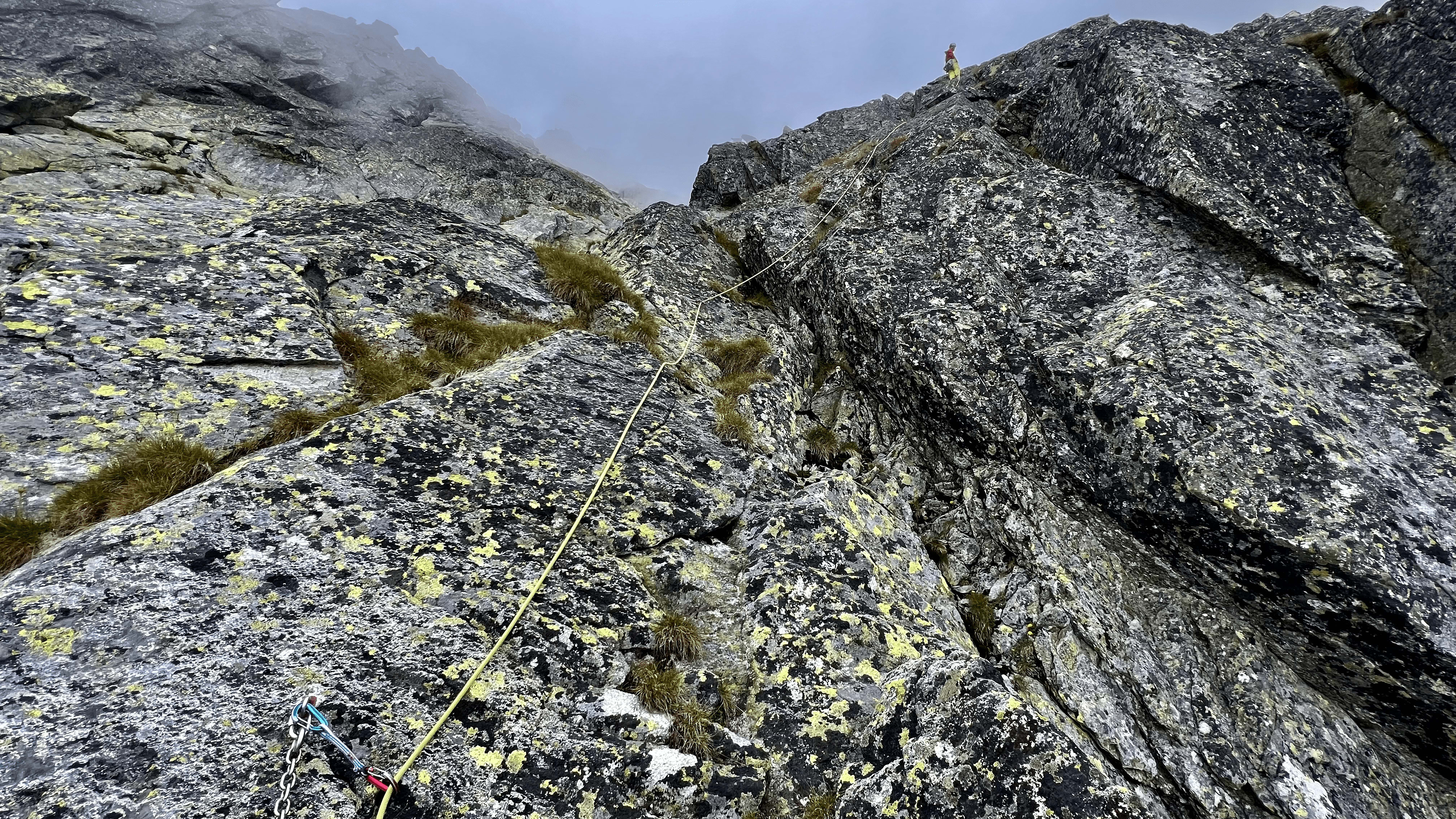
Pitch 4, grade IV+, 27 m, 1 piton
We climb straight up 3 m (IV-). Here, in the rock, in a grassy channel, is a stainless-steel piton. Right above the piton we make a high step to the right across the channel and pull diagonally up toward the arête of the pillar the whole time. We climb small walls broken up by cracks and tiny cascades. There are excellent options there for placing cams and slings. The anchor sits on a comfortable ledge with a gorgeous view. Below us, Dračie pleso shines emerald-green, and from up here you can see the summits of Ošarpance. Človečina, on the Kôpky massif, and the whole Dračí hrebeň lie spread out before us. The views into the wall of Dračí štít are stunning too. Anchor 4 is visible from Anchor 3. Climbers can see each other. Watch out for loose rocks while climbing - your partner is below you at the anchor!
Pitch 5, grade IV-, 30 m
We continue straight up the ridge of the pillar over boulders into a little notch (II+). Excellent protection options (running the rope between rock blocks, or long slings). From there, 7 m up a small wall to the anchor (IV-). In these final metres, gear-placement options are weaker, but the climbing is easy. Anchor 5 is visible from Anchor 4, and climbers can see each other.
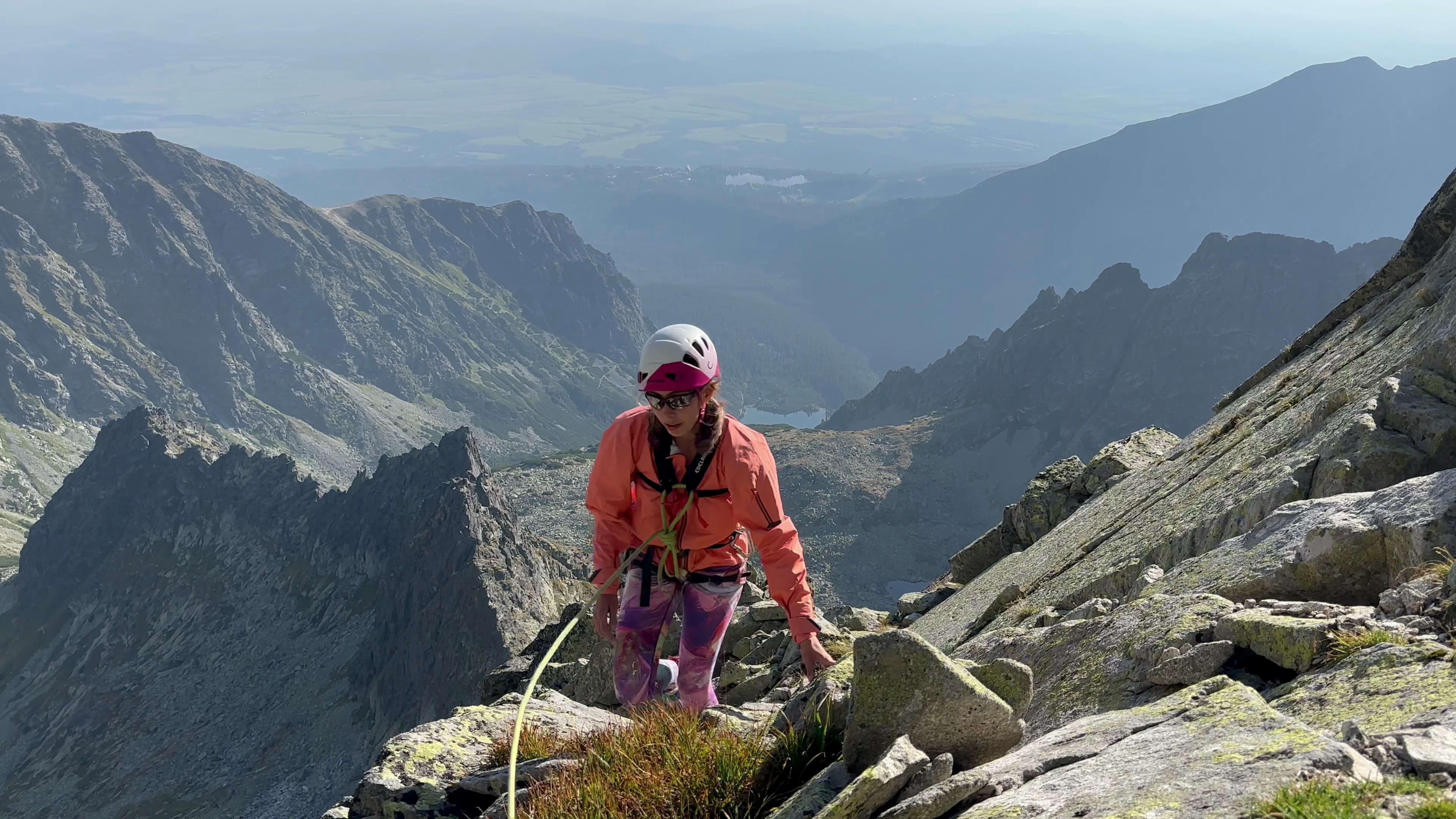
Pitch 6, grade IV+, 20 m
If the climber at the fifth anchor leans back (don't forget to tether in first!), they can see the whole sixth pitch, as well as Anchor 6 at the very top of the pillar. We keep climbing straight up the pillar. We find an enormous flat boulder leaning vertically (roughly 6 x 4 m), and pass it on the right or the left to the top of the pillar itself.
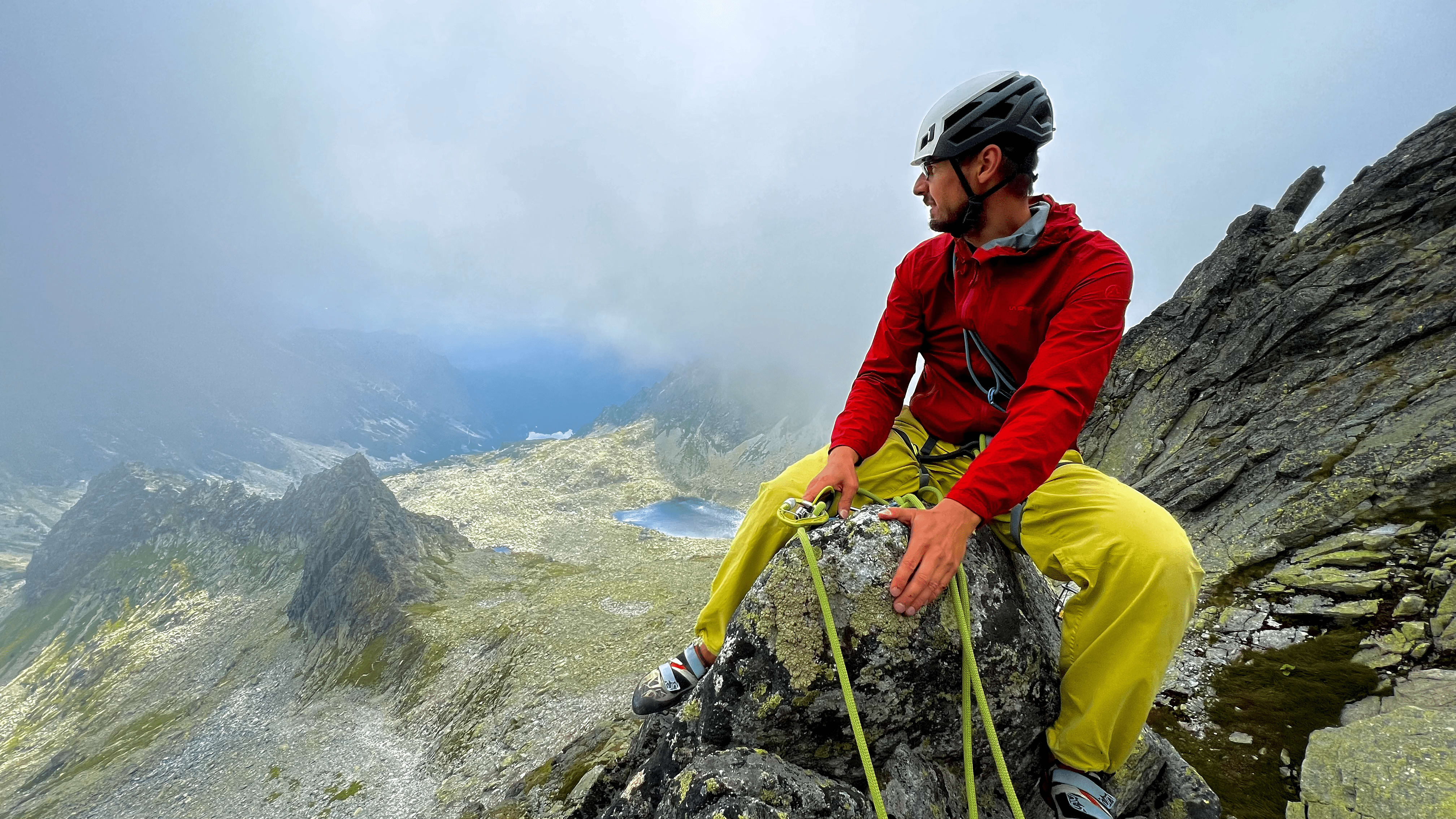
Pitch 7, grade II, 36 m
Along the ridge of the pillar (II) we proceed over enormous boulders, 26 m, to a ledge, from where we walk to the anchor on its right side.
From there, walking terrain to the southeast summit of Vysoká, grade I, 35 minutes
Here the pillar stops being distinct and fades into the south flank. We continue, staying to the south the whole time. We've marked the terrain with cairns.
Descent via the pillar:
A) By rappel
When the central gully is filled with snow, and also if there's a risk of storms or precipitation, it's best to rappel the ascent route. When rappelling in good weather, the optimal option is to rappel from Hviezdolet's seventh anchor down the slab, 30 m, and then traverse 20 m (grade I), descending gently, to Lietavice's fifth anchor. The traverse is protected by four bolts. Never rappel this way if there are people in Vyšné Dračie sedlo, or in rain or a storm! The reason is the risk of falling rocks. From the fifth anchor we continue rappelling down Lietavice's individual pitches. Pay close attention to rope length, especially on the fifth pitch - a sixty-metre rope reaches exactly there. Don't forget knots at the ends of the rope!
B) By downclimbing
A possible alternative to rappelling is a traverse across a rock ledge into the "standard route." This ledge sits above the end of the seventh pitch. From there we can continue down the central gully.
The crossing from the summit to Štrbina pod Vysokou is best done on the north side from the SE summit. A distinct diagonal ledge leads us from there above Štrbina itself, which caps the central gully. At this spot, above the notch, guides have installed one piton. From the notch, iron rungs and chains lead to the NW summit. It holds the oldest surviving summit cross in the Tatras.
Time required
- Approach to the wall from Popradské pleso: 2 hours 20 minutes
- The climb: 3 hours 30 minutes
- Descent and rappel to the base of the wall: 2 hours
- Descent to Popradské pleso: 2 hours
- Total: roughly 10 hours, plus the trip to Popradské pleso and back
These times apply to a two-person climbing team. For a party of three, or for beginners, it may take several hours longer!
Gear
- a sit harness and chest harness
- a helmet
- a single 60 m rope
- 8 quickdraws
- 6 slings (120, 180, and 240 cm) with carabiners
- 6 locking carabiners and 2 HMS carabiners
- a belay/rappel device for each climber (for example a Gigi or a Jul)
- 8 cams - basic as well as tiny sizes, or nuts with a nut tool
- comfortable climbing shoes or approach shoes
- a first-aid kit with a thermal reflective blanket
- a headlamp
- a thermos with warm tea
- food for the field
- clothing to protect against cold and rain
- a mobile phone with a charged battery
- a topo with a route description
- crampons and an ice axe (early in summer)
History
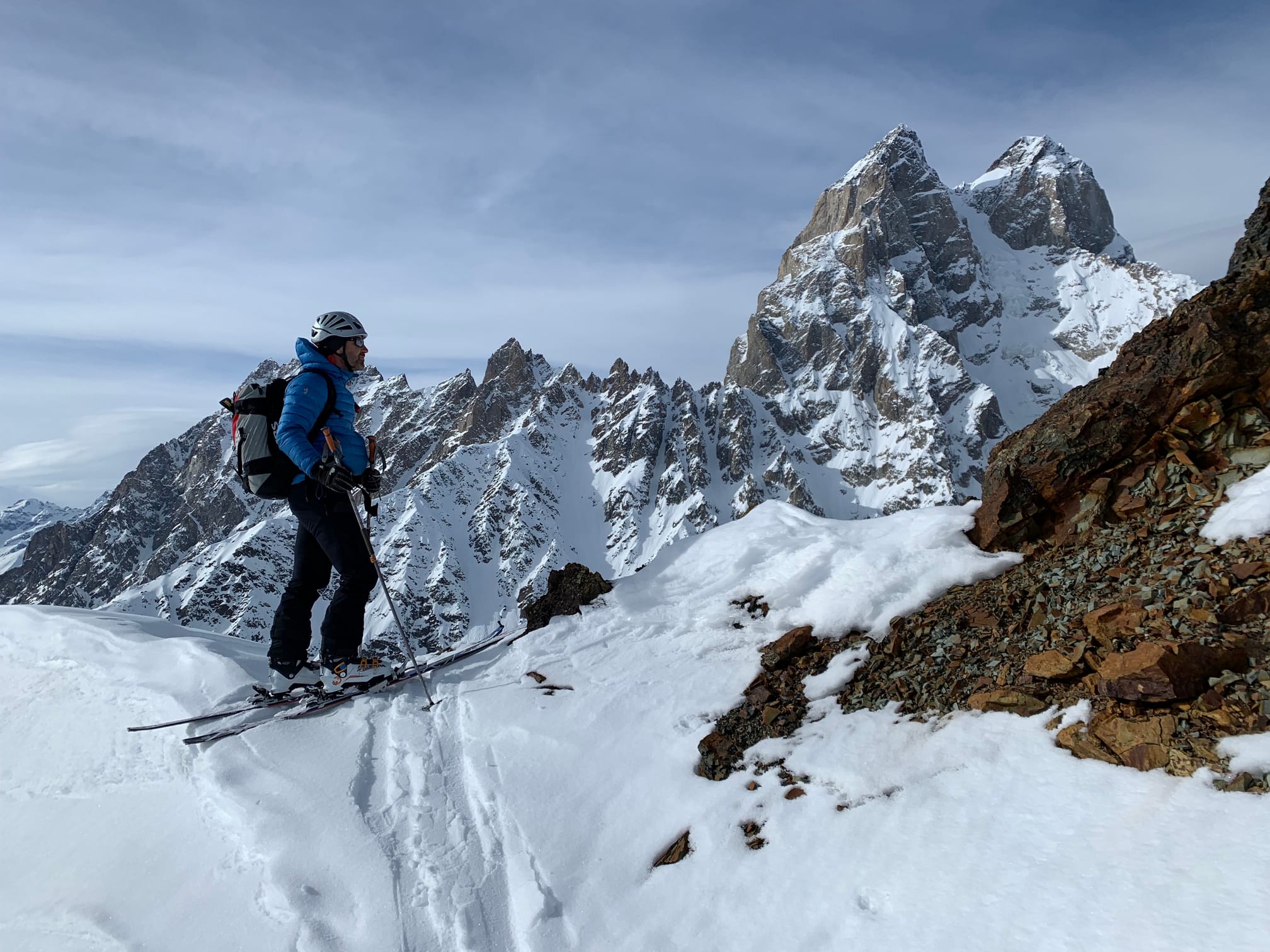
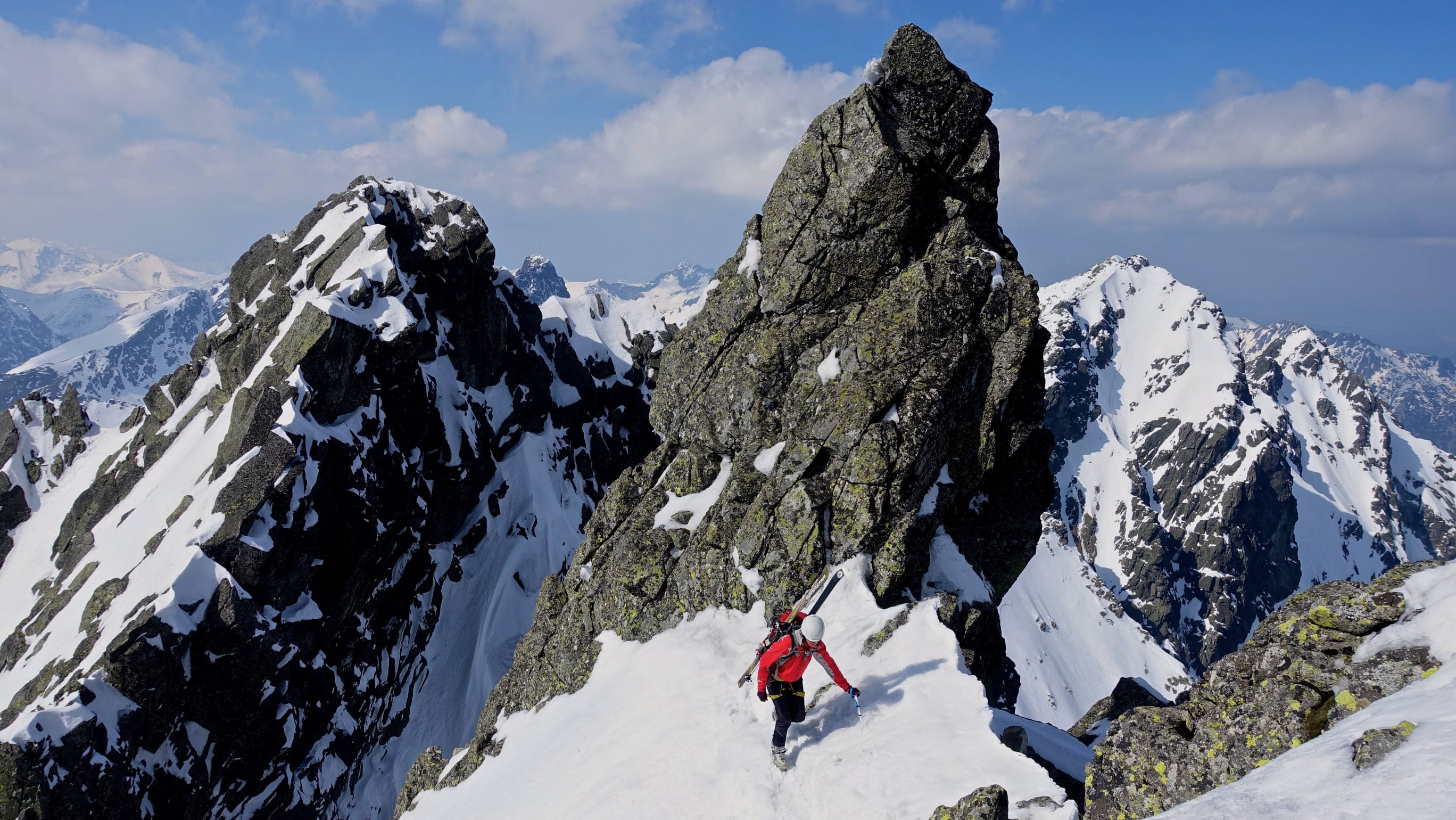
The Matterhorn is the symbol of the Alps; the twin-summited Ushba is the icon of the Caucasus. Neither is the tallest peak in its range. The secret of their charm lies in what they evoke in the human soul. I've come to know those peaks in something like the way climber and geographer Mór Déchy de Marosdécse came to know them at the end of the nineteenth century. Not every mountain range in the world has a peak of that character, but here in the Slovak Tatras we have both of those archetypes represented. Kriváň and Vysoká embody them. Both are symbols - they simply can't be ignored. Kriváň is made accessible by hiking trails, which alone represent enough of a challenge for most visitors to the Tatras. Vysoká, with no built hiking trail, demands a bit more personal grit. Even here, though, the rule can hold: "The more you give, the more you get." Its two summits are (down to a few centimetres) the same elevation, and rank among the ten highest in the Tatras. Vysoká is captivating from every angle and every direction. In winter conditions it lures ski mountaineers with its descent lines from the south, and climbers with ascents from the north. In summer conditions, high-mountain hikers can pay their respects via Sedlo Kohútik, while ridge climbers can honour it with a traverse of the four summits forming its imagined crown.
We opened Pilier Lietavíc to mark the 150th anniversary of the first ascent of Vysoká. The initiator of that event was, at the time, none other than Mór Déchy. He travelled to the Tatras from Buda, climbed Gerlach, and rounded out his overview of our highest mountains. On that basis he then convinced (probably with some help from money too) the guides Ján Ruman-Driečny and Martin Spitzkopf that his line up Vysoká was feasible. The guides, in fact, considered the climb impossible and life-threatening. Déchy wasn't discouraged. In planning the tour he drew on his experience from the Alps. He waited for a spell of favourable weather, and after a first day spent in the valley, chose a bivouac spot. When needed, he patiently explained to the guides the benefits of using a climbing rope, and despite their protests, tied them into it at the right moment. Above all thanks to his determination and knowledge, this Jewish-Slovak-German team finally reached both summits of this imposing peak. It happened on Thursday, 3 September 1874. Even though they reached the second summit at only twenty past eight in the morning, they celebrated the success with champagne. Under a stone cairn they placed a note about the first ascent in an envelope of waterproofed cloth. The pop of their champagne on the summit of Vysoká confirmed that the first era of climbing in the Tatras had begun. It foreshadowed much of what still holds true in the mountains today. I don't mean the bribery and the alcohol. In Mór Déchy's strategy for this ascent, I mean faith in your own strength instead of relying on someone else, patience in waiting for the right conditions, the increased safety that comes from climbing education and modern gear, and a beneficial form of international cooperation.
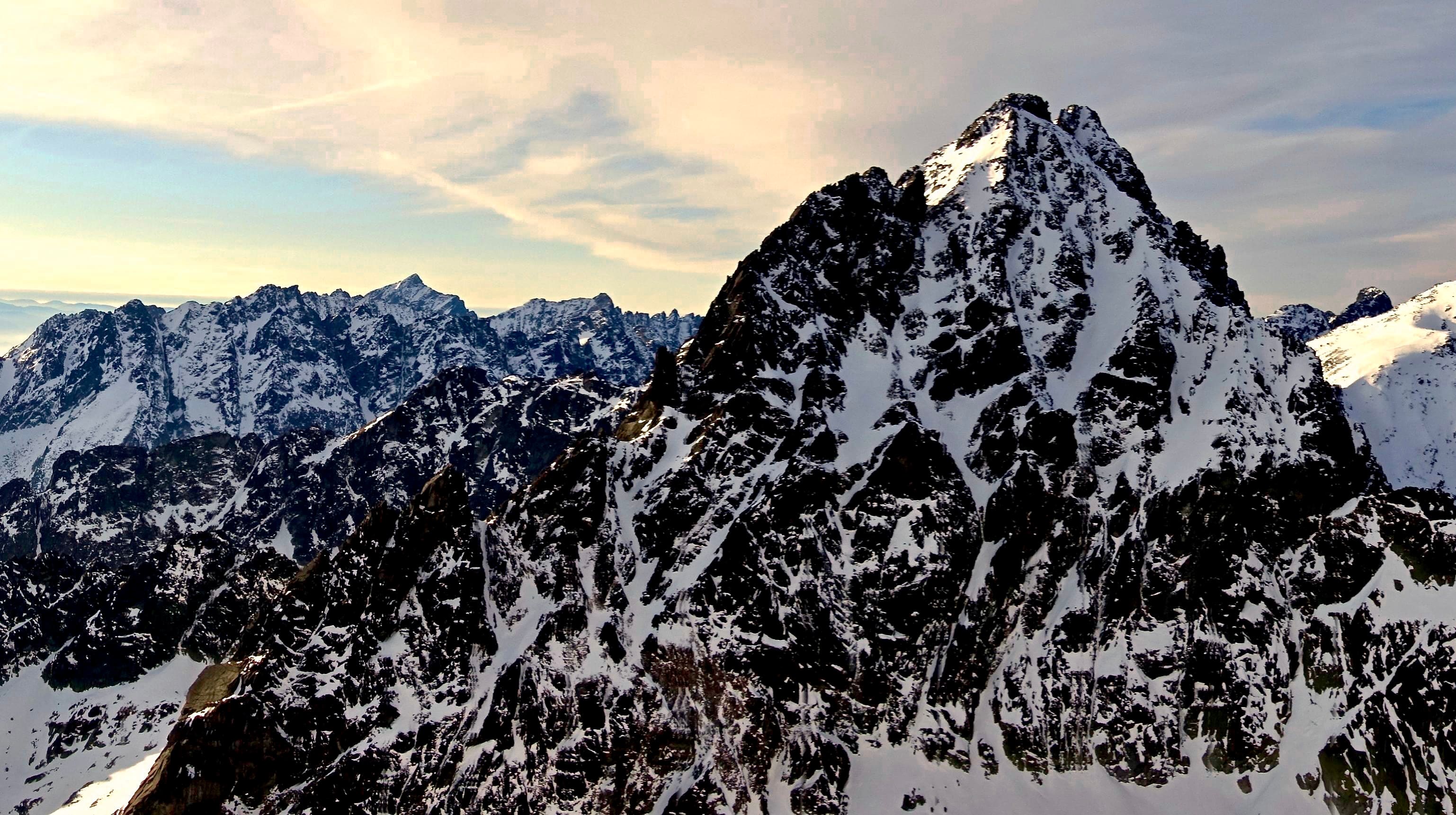
Today, dozens of climbing routes lead to the summit of Vysoká, and numerous ski-mountaineering descents lead down from it. It looks as though every gully, pillar, and wall already has its discoverers. And yet, until recently, a bergschrund guarded one of the peak's two south pillars. Its flanks were occasionally used for rappelling down in winter conditions, but it seemed as though the pillar itself was still waiting for the right alignment of the stars.
Pilier Lietavíc
We climbed the first route up this pillar on Thursday, 13 August 2015, with Zuzka Božiková. This time of year is when the Perseid meteor shower peaks. As we descended Zlomisková dolina at night, with the universe demonstrating its omnipotence, the route got the name Lietavice (Shooting Stars). So instead of water, the pillar was baptized by burning stars. It's said that when a person sees a star fall - since that's what people sometimes call meteors - they can make a wish. I've always wished everyone a safe return. We're connected to the stars by fate, but only in a way that doesn't cost us our freedom. Each of us can still do something on our own. What if the whole universe was set in motion by just one seemingly tiny movement? I sensed I'd have to come back to the pillar with heavy gear. The sign that the right moment had come arrived a few years later, in the form of questions from Peter Hrčka. We got to work, and Peter helped with the labour. Martin Zbuška and Branč Stavný also lent a hand.
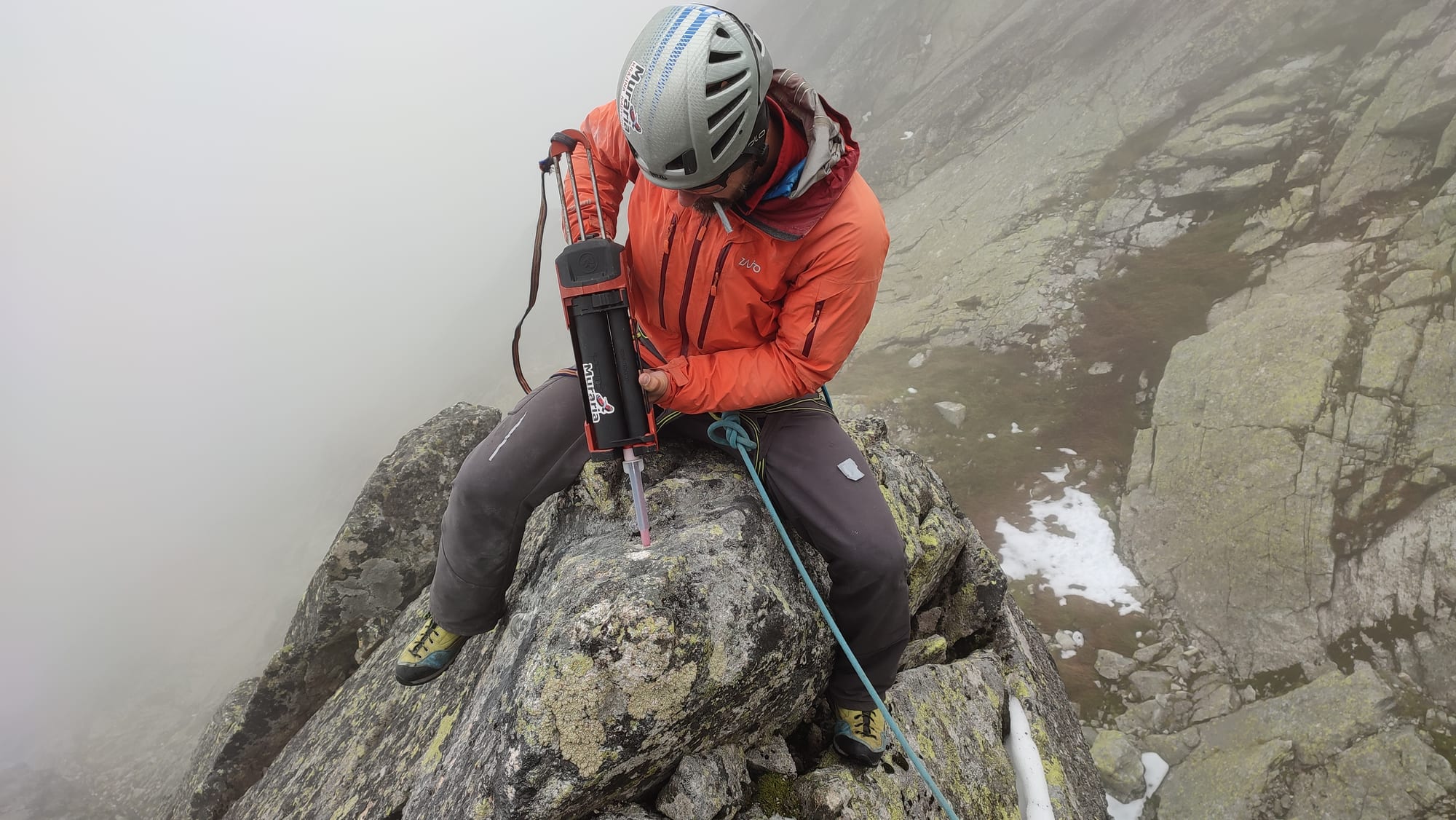
While re-equipping the route, I noticed one more beautiful line right next door, to the left of Lietavice. We couldn't resist. We gradually climbed it, and it got the name Hviezdolet. Years have passed since then. During that time I climbed it many times, usually with a drill and other gear too, always meaning to finally finish opening both routes. We patiently worked on it whenever we could. But I always discovered a few more details. We couldn't finish it until the right alignment of the stars arrived. The cosmic clock keeps precise time. It took a century and a half from the moment the first people touched the summit of Vysoká. Only now, at the time of this anniversary, can I write with a peaceful mind that our work on Pilier Lietavíc is done. Well, it looks like in this jubilee year, it'll be worth packing not just champagne, but also a rope and climbing shoes, on the way to the summit of Vysoká.
This page has been translated using AI and may contain errors.